

Creating Scalable Mobile Apps for Enterprises
In today’s fast-paced business environment, the demand for scalable mobile applications has never been more pronounced. As enterprises grow and evolve, they require solutions that can adapt to increasing user loads and changing business needs. We recognize that a scalable mobile app is not just a luxury; it is a necessity for organizations aiming to maintain competitiveness and efficiency.
The ability to accommodate a growing number of users without compromising performance is crucial. This scalability ensures that as our workforce expands or as we introduce new services, our mobile applications can handle the increased demand seamlessly. Moreover, the rise of remote work and the global workforce has further emphasized the importance of mobile applications that can scale effectively.
We find ourselves in an era where employees expect to access enterprise resources from anywhere, at any time, using their mobile devices. This shift necessitates that our mobile apps are not only robust but also flexible enough to support various functionalities and integrations. By investing in scalable mobile applications, we position ourselves to respond swiftly to market changes, enhance productivity, and ultimately drive business growth.
Key Takeaways
- Scalable mobile apps are essential for enterprises to meet the growing demands of their users and business operations.
- Choosing the right technology stack is crucial for building scalable mobile apps that can handle increasing user loads and data processing.
- User-friendly interfaces are important for enterprise mobile apps to ensure smooth and efficient user interactions and experiences.
- Implementing robust security measures is critical to protect sensitive enterprise data and ensure compliance with industry regulations.
- Integrating enterprise mobile apps with existing systems and software is necessary for seamless data exchange and workflow integration.
Choosing the Right Technology Stack for Scalable Mobile Apps
Selecting the appropriate technology stack is a pivotal step in developing scalable mobile applications. We must consider various factors, including the specific needs of our enterprise, the skills of our development team, and the long-term vision for our mobile strategy. A well-chosen technology stack can significantly influence the performance, scalability, and maintainability of our applications.
For instance, opting for cloud-based solutions can provide us with the flexibility to scale resources up or down based on demand, ensuring that we only pay for what we use. Additionally, we should evaluate both native and cross-platform development frameworks. Native apps often deliver superior performance and user experience, but they may require more resources and time to develop for multiple platforms.
On the other hand, cross-platform frameworks allow us to write code once and deploy it across various operating systems, which can accelerate development timelines and reduce costs. By carefully weighing these options, we can select a technology stack that aligns with our business objectives while ensuring that our mobile applications remain scalable and efficient.
Designing User-friendly Interfaces for Enterprise Mobile Apps

Creating user-friendly interfaces is essential for the success of our enterprise mobile applications. We understand that a well-designed interface enhances user engagement and satisfaction, which is particularly important in a corporate setting where employees may be juggling multiple tasks. Our focus should be on simplicity and intuitiveness; users should be able to navigate the app effortlessly without extensive training or support.
By prioritizing user experience in our design process, we can foster higher adoption rates among employees. Moreover, we must consider the diverse range of users who will interact with our mobile applications. Different departments may have varying needs and preferences, so it is crucial to conduct thorough user research and testing.
By gathering feedback from actual users during the design phase, we can identify pain points and areas for improvement. This iterative approach not only helps us create a more effective interface but also ensures that our applications are tailored to meet the specific requirements of our workforce.
Implementing Robust Security Measures in Enterprise Mobile Apps
As we develop scalable mobile applications for our enterprise, implementing robust security measures is non-negotiable. With increasing cyber threats and data breaches becoming more common, we must prioritize the protection of sensitive information. This involves adopting best practices such as data encryption, secure authentication methods, and regular security audits.
By integrating these measures into our development process from the outset, we can mitigate risks and safeguard our enterprise data. Furthermore, we should stay informed about the latest security trends and compliance regulations relevant to our industry. This knowledge enables us to proactively address potential vulnerabilities and ensure that our mobile applications adhere to legal requirements.
Regular training sessions for our development team on security best practices can also foster a culture of security awareness within our organization. By taking these steps, we not only protect our data but also build trust with our users, reinforcing their confidence in using our mobile applications.
Integrating Enterprise Mobile Apps with Existing Systems and Software
Integration is a critical aspect of developing scalable mobile applications for enterprises. We must ensure that our new mobile apps can seamlessly connect with existing systems and software within our organization. This integration allows for real-time data exchange and enhances overall operational efficiency.
For instance, if our mobile app can communicate with our customer relationship management (CRM) system, employees can access vital customer information on-the-go, leading to improved service delivery. To achieve successful integration, we should adopt an API-first approach when designing our mobile applications. By creating well-defined APIs, we enable other systems to interact with our app easily.
This not only streamlines data flow but also allows us to leverage existing functionalities without reinventing the wheel. Additionally, we should consider using middleware solutions that facilitate communication between disparate systems. By prioritizing integration in our development strategy, we can create a cohesive ecosystem that enhances productivity across the organization.
Testing and Quality Assurance for Scalable Enterprise Mobile Apps
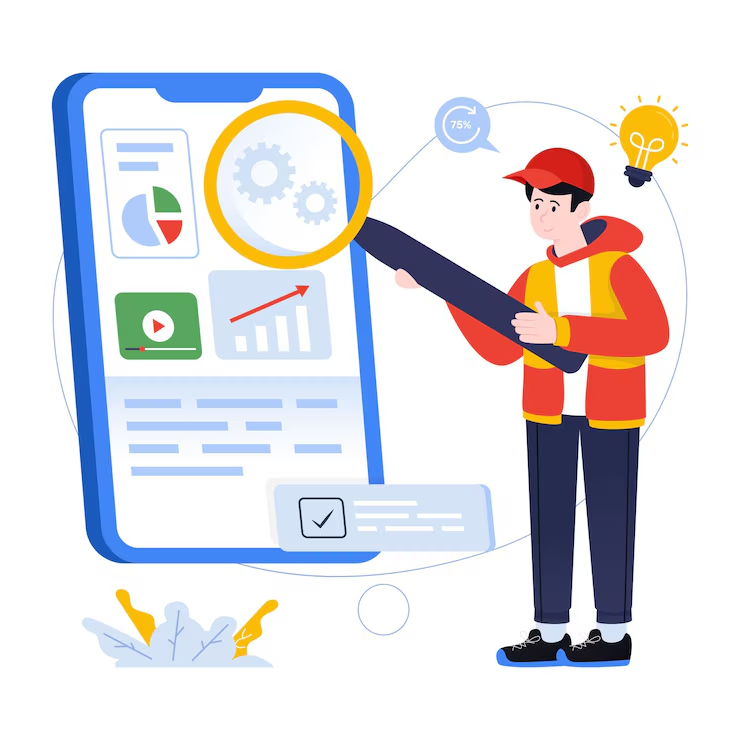
Testing and quality assurance are integral components of developing scalable enterprise mobile applications. We must implement a comprehensive testing strategy that encompasses various testing types, including functional testing, performance testing, and user acceptance testing (UAT). By rigorously testing our applications before deployment, we can identify and rectify issues early in the development process, ensuring a smoother launch.
Moreover, automated testing tools can significantly enhance our testing efforts by allowing us to run tests quickly and efficiently across different devices and platforms. This not only saves time but also ensures consistent quality across all versions of our application. Additionally, involving end-users in UAT provides valuable insights into how well the app meets their needs and expectations.
By prioritizing thorough testing and quality assurance practices, we can deliver a reliable and high-performing mobile application that meets the demands of our enterprise.
Deploying and Managing Enterprise Mobile Apps at Scale
Once we have developed and tested our scalable mobile applications, the next step is deployment and management at scale. We must choose an appropriate deployment strategy that aligns with our organizational goals and user needs. Whether we opt for a phased rollout or a full-scale launch, careful planning is essential to minimize disruptions and ensure a smooth transition for users.
Post-deployment management is equally important as it involves monitoring app performance, user feedback, and system integrations continuously. We should establish key performance indicators (KPIs) to measure the success of our application in real-time. This data-driven approach allows us to identify areas for improvement quickly and make informed decisions about future updates or enhancements.
By adopting effective deployment and management practices, we can ensure that our enterprise mobile applications remain functional and relevant as user needs evolve.
Continuous Improvement and Updates for Enterprise Mobile Apps
The journey does not end with deployment; continuous improvement is vital for maintaining the relevance and effectiveness of our enterprise mobile applications. We must establish a feedback loop that encourages users to share their experiences and suggestions for enhancements. Regularly updating our apps based on user feedback not only improves functionality but also demonstrates our commitment to meeting their needs.
Additionally, staying abreast of technological advancements allows us to incorporate new features or capabilities into our applications over time. This proactive approach ensures that we leverage emerging trends while keeping pace with competitors in the market. By fostering a culture of continuous improvement within our development team, we can create scalable mobile applications that evolve alongside our enterprise’s growth and changing demands.
In conclusion, developing scalable mobile applications for enterprises requires a multifaceted approach encompassing understanding user needs, selecting appropriate technologies, ensuring security, integrating systems, rigorous testing, effective deployment management, and ongoing improvements. By focusing on these critical areas, we position ourselves to create robust mobile solutions that enhance productivity and drive business success in an increasingly digital world.
Techno Softwares offers custom software development services to help enterprises create scalable mobile apps. In a related article on their blog, they provide a comprehensive API development guide for businesses looking to enhance their digital presence. This guide can be a valuable resource for companies seeking to streamline their operations and improve customer experiences through efficient API integration. For those interested in optimizing their WordPress websites for better SEO performance, Techno Softwares also offers insights and tips in another informative article on their blog. Overall, Techno Softwares is dedicated to providing innovative solutions for enterprises looking to stay ahead in the digital landscape. API Development Guide WordPress Optimization for Better SEO
FAQs
What are scalable mobile apps for enterprises?
Scalable mobile apps for enterprises are applications designed to grow and adapt to the changing needs and demands of a business. These apps are built to handle increasing user loads, data storage, and feature enhancements without compromising performance.
Why are scalable mobile apps important for enterprises?
Scalable mobile apps are important for enterprises because they allow businesses to accommodate growth and changes without having to completely overhaul their technology infrastructure. These apps can handle increased user traffic, data storage, and new features, making them a cost-effective and efficient solution for businesses.
How can Techno Softwares help in creating scalable mobile apps for enterprises?
Techno Softwares is a software development company that specializes in creating scalable mobile apps for enterprises. They have a team of experienced developers who can design and build custom mobile apps that can grow and adapt to the changing needs of a business. Their expertise in scalable app development ensures that businesses can stay ahead of the competition and meet the demands of their users.
What are the benefits of using scalable mobile apps for enterprises?
Using scalable mobile apps for enterprises offers several benefits, including cost-effectiveness, improved performance, flexibility, and the ability to accommodate growth and changes. These apps can also provide a better user experience and help businesses stay competitive in the market.
What are some key features of scalable mobile apps for enterprises?
Key features of scalable mobile apps for enterprises include cloud integration, modular architecture, load balancing, auto-scaling, and efficient data management. These features enable the apps to handle increasing user loads, data storage, and feature enhancements without compromising performance.


