

Extracting Competitor Product Listings and New Launches Through Web Scraping
Web scraping is a powerful technique that involves extracting data from websites using automated tools or scripts. This process allows businesses to gather vast amounts of information from various online sources, which can be invaluable for competitive analysis. By leveraging web scraping, companies can monitor their competitors’ activities, track market trends, and gain insights into consumer behavior.
The benefits of web scraping extend beyond mere data collection; it enables organizations to make informed decisions based on real-time information, ultimately enhancing their strategic positioning in the marketplace. One of the primary advantages of web scraping for competitor monitoring is its ability to provide a comprehensive view of the competitive landscape. Businesses can track changes in pricing, product offerings, and promotional strategies employed by their rivals.
This level of insight allows companies to identify gaps in the market, recognize emerging trends, and adapt their strategies accordingly. For instance, if a competitor launches a new product line or adjusts their pricing strategy, a business can quickly respond by refining its own offerings or marketing tactics to maintain its competitive edge.
Key Takeaways
- Web scraping is a valuable tool for monitoring competitors and gathering data for analysis.
- Extracting competitor product listings and new launches is crucial for staying competitive in the market.
- Techno Softwares offers automation solutions for competitor monitoring through web scraping.
- Automating competitor monitoring with web scraping provides numerous advantages for businesses.
- Web scraping can give businesses a competitive edge by providing valuable market insights and intelligence.
The Importance of Extracting Competitor Product Listings and New Launches
Extracting competitor product listings and new launches is crucial for businesses aiming to stay relevant in a fast-paced market. By analyzing the product catalogs of competitors, companies can gain insights into the types of products that are gaining traction among consumers. This information is vital for product development teams, as it helps them understand consumer preferences and identify potential gaps in their own product lines.
For example, if a competitor introduces a new eco-friendly product that resonates with consumers, other businesses may consider developing similar offerings to meet the growing demand for sustainable options. Moreover, monitoring new launches allows companies to stay ahead of industry trends and innovations. In sectors such as technology and fashion, where trends can shift rapidly, being aware of competitors’ new products can inform a company’s own research and development efforts.
By understanding what competitors are introducing to the market, businesses can align their strategies to either differentiate themselves or capitalize on emerging trends. This proactive approach not only enhances product relevance but also fosters a culture of innovation within the organization.
The Role of Web Scraping in Gathering Data for Competitor Analysis
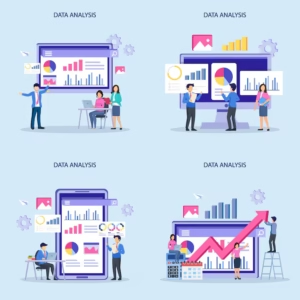
Web scraping plays a pivotal role in gathering data for competitor analysis by automating the collection of relevant information from various online sources. This process enables businesses to compile extensive datasets that can be analyzed for patterns and insights. For instance, by scraping data from e-commerce platforms, companies can gather information on pricing strategies, customer reviews, and product specifications.
This wealth of data can then be used to conduct comparative analyses that highlight strengths and weaknesses relative to competitors. Additionally, web scraping facilitates the continuous monitoring of competitors’ online presence. Unlike traditional methods of data collection, which may involve manual research or periodic surveys, web scraping allows for real-time updates.
This means that businesses can track changes in competitor strategies as they happen, enabling them to respond swiftly to market dynamics. For example, if a competitor suddenly drops prices on a popular product, a business can quickly adjust its pricing strategy to remain competitive. This agility is essential in today’s fast-moving business environment.
How Techno Softwares Can Automate Competitor Monitoring Through Web Scraping
Techno Softwares offers advanced web scraping solutions that automate the process of competitor monitoring. By utilizing sophisticated algorithms and customizable scraping tools, businesses can efficiently gather data from multiple sources without the need for extensive manual intervention. These software solutions are designed to extract specific data points such as product listings, pricing information, and promotional content from competitors’ websites.
This automation not only saves time but also reduces the likelihood of human error in data collection. Furthermore, Techno Softwares provides features that allow users to schedule scraping tasks at regular intervals. This means that businesses can set up automated processes to continuously monitor competitors without having to manually initiate each scrape.
The ability to receive timely updates on competitor activities ensures that organizations remain informed about market changes and can adapt their strategies accordingly. For instance, if a competitor launches a new marketing campaign or introduces a new product line, businesses using Techno Softwares can quickly analyze this information and adjust their own marketing efforts in response.
The Process of Extracting Competitor Product Listings and New Launches Using Web Scraping
The process of extracting competitor product listings and new launches through web scraping typically involves several key steps. Initially, businesses must identify the specific websites they wish to scrape for relevant data. This could include e-commerce platforms, brand websites, or industry-specific marketplaces.
Once the target sites are determined, the next step is to configure the web scraping tool to extract the desired data points, such as product names, descriptions, prices, and launch dates. After setting up the scraping parameters, the tool will begin collecting data from the specified websites. The extracted information is then organized into a structured format, such as a spreadsheet or database, making it easier for analysts to review and interpret the data.
Advanced web scraping tools also offer features like data cleaning and normalization, ensuring that the collected information is accurate and consistent across different sources. Once the data is gathered and organized, businesses can analyze it to identify trends in competitor offerings and assess how these align with their own product strategies.
The Advantages of Automating Competitor Monitoring with Web Scraping
Efficient Data Collection
One significant benefit is the ability to gather large volumes of data quickly and accurately. Manual data collection methods are often time-consuming and prone to errors; however, automated scraping tools can extract information from multiple sources simultaneously, providing businesses with comprehensive datasets in a fraction of the time.
Consistency and Reliability
Another advantage is the consistency and reliability of data collection. Automated web scraping ensures that data is collected at regular intervals without interruption, allowing businesses to maintain an up-to-date understanding of their competitive landscape. This continuous flow of information enables organizations to identify shifts in market dynamics promptly and adjust their strategies accordingly.
Informed Decision-Making
For example, if a competitor consistently introduces innovative products or alters pricing strategies, businesses can leverage this information to refine their own offerings or marketing approaches.
How Web Scraping Can Keep You Ahead in the Market
Web scraping serves as a critical tool for businesses seeking to maintain a competitive advantage in their respective markets. By continuously monitoring competitors’ activities and gathering insights into consumer preferences, organizations can make informed decisions that drive growth and innovation. For instance, if a company identifies that a rival has successfully launched a new product line targeting a specific demographic, it can analyze this success and consider similar strategies tailored to its own audience.
Moreover, web scraping allows businesses to stay attuned to market trends and shifts in consumer behavior. By analyzing data collected from various sources—such as social media platforms, review sites, and e-commerce websites—companies can gain valuable insights into what consumers are looking for in products or services. This understanding enables them to adapt their offerings proactively rather than reactively, positioning themselves as leaders in their industry rather than followers.
The Impact of Web Scraping on Competitive Intelligence and Market Research
The impact of web scraping on competitive intelligence and market research cannot be overstated. By providing access to real-time data from competitors’ websites and other online platforms, web scraping enhances the quality and depth of market research efforts. Businesses can analyze competitor pricing strategies, promotional campaigns, and customer feedback—all critical components of effective competitive intelligence.
Furthermore, web scraping enables organizations to conduct sentiment analysis by gathering customer reviews and feedback from various platforms. This analysis helps businesses understand how consumers perceive their products compared to those of competitors. By identifying strengths and weaknesses based on customer sentiment, companies can refine their marketing strategies and improve product offerings to better meet consumer needs.
Best Practices for Extracting Competitor Product Listings and New Launches Through Web Scraping
To maximize the effectiveness of web scraping for extracting competitor product listings and new launches, businesses should adhere to several best practices. First and foremost, it is essential to ensure compliance with legal regulations regarding data scraping. Many websites have terms of service that prohibit automated data collection; therefore, organizations must familiarize themselves with these policies before initiating any scraping activities.
Additionally, businesses should focus on selecting reliable web scraping tools that offer robust features for data extraction and analysis. Tools should be capable of handling dynamic content and adapting to changes in website structures over time. Regularly updating scraping scripts is also crucial to ensure continued accuracy in data collection as websites evolve.
Another best practice involves implementing data validation processes post-extraction. This step ensures that the collected data is accurate and relevant for analysis. By cross-referencing scraped data with other sources or conducting manual checks on sample datasets, organizations can maintain high-quality standards in their competitive intelligence efforts.
Overcoming Challenges in Web Scraping for Competitor Monitoring
While web scraping offers significant advantages for competitor monitoring, it also presents several challenges that businesses must navigate effectively. One common challenge is dealing with anti-scraping measures implemented by websites. Many sites employ techniques such as CAPTCHAs or IP blocking to prevent automated data collection.
To overcome these obstacles, businesses may need to invest in advanced scraping tools that incorporate features like rotating IP addresses or CAPTCHA-solving capabilities. Another challenge lies in managing the sheer volume of data collected through web scraping. Organizations must have robust data management systems in place to store, organize, and analyze this information effectively.
Without proper infrastructure, businesses may struggle to derive actionable insights from the vast datasets generated through scraping activities. Finally, ensuring data accuracy remains a critical concern when engaging in web scraping for competitor monitoring. Websites frequently update their content; therefore, organizations must implement regular checks and updates to their scraping processes to maintain data integrity over time.
Leveraging Web Scraping for Competitive Advantage in Business
Leveraging web scraping effectively can provide businesses with a substantial competitive advantage in today’s dynamic marketplace. By harnessing the power of automated data collection tools, organizations can gain insights into competitor strategies that inform their own decision-making processes. This capability allows companies not only to react swiftly to market changes but also to anticipate trends before they become mainstream.
Moreover, by continuously monitoring competitors’ product listings and new launches through web scraping, businesses can identify opportunities for differentiation in their offerings. Understanding what works well for competitors enables organizations to innovate while avoiding potential pitfalls associated with saturated markets or outdated products. In conclusion, web scraping stands out as an essential tool for modern businesses seeking to enhance their competitive intelligence efforts through effective monitoring of competitors’ activities.
By embracing this technology responsibly and strategically, organizations can position themselves at the forefront of their industries while fostering a culture of innovation driven by real-time insights into market dynamics.
If you are interested in learning more about how Techno Softwares can help automate competitor monitoring to keep you ahead, check out their blog post on Blackhawk Network API Integration with OpenCart. This article discusses how integrating APIs can streamline processes and improve efficiency in e-commerce platforms. Additionally, you may also find their blog post on software architecture patterns helpful in understanding the importance of choosing the right approach for your project. And if you are wondering whether social media marketing is worth it for your business, be sure to read their article on the benefits and considerations of social media marketing.
Get Scraping Service (FREE Demo)
FAQs
What is web scraping?
Web scraping is the process of extracting data from websites. It involves using automated tools to gather information from web pages, which can then be used for various purposes such as market research, competitor analysis, and price monitoring.
How can web scraping be used for competitor product listings and new launches?
Web scraping can be used to extract information about competitor product listings and new launches from their websites. This data can then be used to analyze the competitive landscape, identify new product launches, and track changes in pricing and product offerings.
How can Techno Softwares automate competitor monitoring using web scraping?
Techno Softwares offers web scraping services that can automate the process of monitoring competitor product listings and new launches. By using custom web scraping tools, Techno Softwares can gather real-time data from competitor websites and provide clients with valuable insights to stay ahead in the market.
What are the benefits of using web scraping for competitor monitoring?
Using web scraping for competitor monitoring allows businesses to stay informed about their competitors’ product offerings, pricing strategies, and new launches. This information can be used to make informed business decisions, identify market trends, and stay ahead of the competition.
Is web scraping legal for competitor monitoring?
The legality of web scraping for competitor monitoring can vary depending on the specific circumstances and the laws of the jurisdiction in which the scraping is taking place. It is important to ensure that web scraping is conducted in compliance with applicable laws and regulations, including respecting website terms of service and privacy policies.