

How ERP Systems Improve Financial Management
In the ever-evolving landscape of business management, Enterprise Resource Planning (ERP) systems have emerged as a cornerstone for organizations striving for efficiency and coherence. These integrated software solutions allow businesses to manage and automate core functions, ranging from finance and human resources to supply chain and customer relationship management. As we delve into the world of ERP systems, we recognize their transformative potential in streamlining operations and enhancing decision-making processes.
By consolidating various business processes into a single framework, ERP systems provide a holistic view of organizational performance, enabling us to respond swiftly to market changes and internal challenges. The adoption of ERP systems is not merely a trend; it represents a fundamental shift in how we approach business management. As we navigate through the complexities of modern enterprises, the need for real-time data and seamless communication across departments becomes increasingly critical.
ERP systems facilitate this by breaking down silos and fostering collaboration among teams. This integration not only enhances operational efficiency but also empowers us to make informed decisions based on accurate and timely information. In this article, we will explore the significance of financial management within the context of ERP systems and how these tools can revolutionize our approach to managing finances.
Key Takeaways
- ERP systems are integrated software solutions that help businesses manage and automate their processes.
- Financial management is crucial for the success of any business, as it involves planning, organizing, directing, and controlling the financial activities of the organization.
- ERP systems enhance financial management by providing real-time data, streamlining processes, and improving decision-making.
- Implementing an ERP system for financial management can lead to increased efficiency, cost savings, and improved accuracy in financial reporting.
- Techno Softwares offers tailored ERP solutions that can be customized and integrated to meet the specific needs of businesses.
The Importance of Financial Management
The Importance of Sustainable Financial Planning
Effective financial management goes beyond just maintaining budgets or tracking expenses; it’s about creating a sustainable financial future for our organizations. By doing so, we can assess risks, identify opportunities for growth, and ensure compliance with regulatory requirements.
Driving Strategic Decisions with Financial Insights
Sound financial management provides us with the insights needed to make strategic decisions that drive profitability and long-term success. By analyzing financial data, we can identify trends, forecast future performance, and allocate resources where they are most needed.
Staying Ahead in a Competitive Environment
This proactive approach enables us to respond to market fluctuations and adapt our strategies accordingly. In an increasingly competitive environment, the ability to manage finances effectively can be the differentiating factor that sets successful organizations apart from their peers.
How ERP Systems Enhance Financial Management
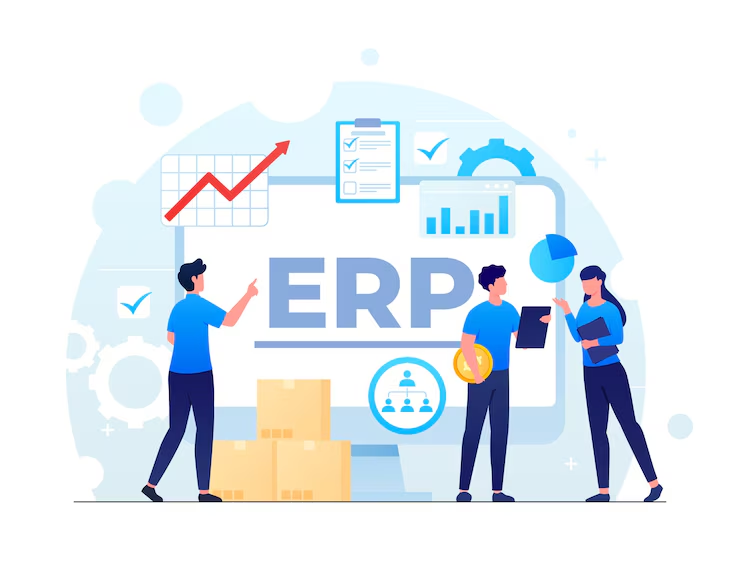
ERP systems play a crucial role in enhancing financial management by providing a unified platform for data collection, analysis, and reporting. With all financial data centralized within an ERP system, we can eliminate discrepancies that often arise from using disparate systems or manual processes. This centralization not only improves accuracy but also saves time, allowing us to focus on strategic initiatives rather than getting bogged down in administrative tasks.
The automation of routine financial processes—such as invoicing, payroll, and expense tracking—further streamlines operations and reduces the risk of human error. Additionally, ERP systems offer advanced analytics capabilities that empower us to gain deeper insights into our financial performance. By leveraging real-time data, we can generate comprehensive reports that highlight key performance indicators (KPIs) and trends.
This level of visibility enables us to make informed decisions based on current conditions rather than relying on outdated information. Furthermore, many ERP systems come equipped with forecasting tools that allow us to project future financial scenarios, helping us to plan for growth and navigate potential challenges with confidence.
Benefits of Implementing an ERP System for Financial Management
The implementation of an ERP system for financial management brings a multitude of benefits that can significantly enhance our organizational performance. One of the most notable advantages is improved efficiency. By automating routine tasks and centralizing data, we can reduce the time spent on manual processes and minimize the risk of errors.
This efficiency translates into faster financial closing cycles, enabling us to produce timely reports that inform decision-making. Another key benefit is enhanced compliance and risk management. With regulatory requirements becoming increasingly complex, having an ERP system in place helps us maintain accurate records and ensure compliance with financial regulations.
The built-in controls and audit trails provided by ERP systems allow us to monitor transactions closely and identify any discrepancies or potential fraud early on. This proactive approach not only safeguards our organization’s assets but also builds trust with stakeholders by demonstrating our commitment to transparency and accountability.
Tailored ERP Solutions from Techno Softwares
As we explore the landscape of ERP solutions, it becomes evident that one size does not fit all. Different organizations have unique needs and challenges that require tailored approaches to financial management. Techno Softwares stands out as a provider of customized ERP solutions designed to meet the specific requirements of various industries.
By understanding our business processes and objectives, Techno Softwares can develop an ERP system that aligns with our goals while addressing our pain points. The flexibility offered by Techno Softwares allows us to choose modules that are most relevant to our operations, ensuring that we only invest in features that add value. Whether we require advanced financial reporting tools, budgeting capabilities, or integration with existing systems, Techno Softwares can deliver solutions that enhance our financial management processes.
This level of customization not only improves user adoption but also maximizes the return on investment by ensuring that the ERP system serves our unique needs effectively.
Customization and Integration of ERP Systems
Introduction to ERP Customization
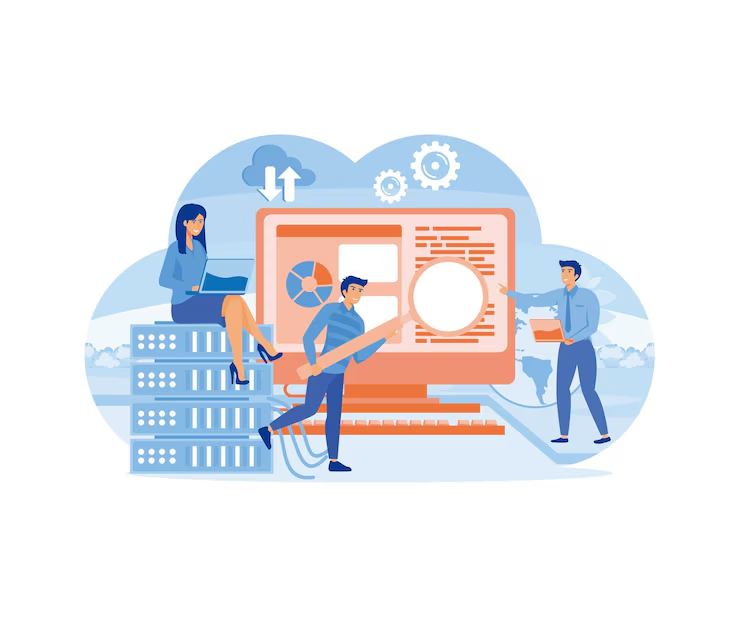
Customization and integration are critical components of successful ERP implementation. As we consider adopting an ERP system, it is essential to ensure that it can be tailored to fit our specific workflows and processes. Customization allows us to modify features, interfaces, and functionalities according to our preferences, making the system more intuitive for our teams.
The Importance of Adaptability
This adaptability fosters user engagement and encourages employees to embrace the new technology rather than resist it. By making the system more user-friendly, we can increase productivity and reduce the time it takes for employees to get up to speed with the new system.
Integration for Enhanced Efficiency
Integration is equally important as it ensures that our ERP system can communicate seamlessly with other software applications used within our organization. Whether it’s linking our CRM system with financial management tools or integrating supply chain management functionalities, a well-integrated ERP system creates a cohesive ecosystem that enhances overall efficiency.
Streamlining Information Flow
By breaking down barriers between different departments and systems, we can achieve a more streamlined flow of information that supports better decision-making across the organization. This, in turn, can lead to improved collaboration, increased efficiency, and a more competitive edge in the market.
Case Studies of Successful ERP Implementations
To illustrate the transformative impact of ERP systems on financial management, we can look at several case studies showcasing successful implementations across various industries. For instance, a mid-sized manufacturing company faced challenges with inventory management and financial reporting due to disparate systems. After implementing an ERP solution from Techno Softwares, they experienced a significant reduction in inventory costs and improved accuracy in financial reporting.
The centralized data allowed them to make informed decisions regarding production schedules and resource allocation. Another compelling case involves a retail organization that struggled with managing multiple sales channels and reconciling financial data from various sources. By adopting an integrated ERP system, they streamlined their operations and gained real-time visibility into sales performance across all channels.
This newfound clarity enabled them to optimize pricing strategies and inventory levels, ultimately leading to increased profitability. These examples underscore how tailored ERP solutions can address specific challenges while enhancing overall financial management capabilities.
The Future of ERP Systems in Financial Management
As we look ahead, the future of ERP systems in financial management appears promising. With advancements in technology such as artificial intelligence (AI) and machine learning (ML), we anticipate even greater enhancements in data analysis and decision-making capabilities within ERP systems. These innovations will enable us to harness vast amounts of data more effectively, providing insights that drive strategic initiatives and foster growth.
Moreover, as businesses continue to embrace digital transformation, the demand for agile and scalable ERP solutions will only increase. Organizations will seek systems that not only meet their current needs but also adapt to future challenges in an ever-changing market landscape. By investing in robust ERP solutions today, we position ourselves for success in navigating the complexities of tomorrow’s business environment.
Ultimately, the integration of advanced technologies within ERP systems will redefine how we approach financial management, empowering us to achieve greater efficiency, accuracy, and strategic alignment in our operations.
If you are interested in learning more about the importance of outsourcing web services, check out this insightful article on the importance of outsourcing web services. Outsourcing can be a valuable strategy for businesses looking to streamline their operations and improve efficiency. Additionally, if you want to stay up-to-date on the latest trends in frontend development, be sure to read this article on 10 frontend trends. Keeping abreast of industry trends can help you stay competitive in the ever-evolving tech landscape. Lastly, if you are looking to integrate an API into your Shopify store, this article on integrating an API into Shopify provides valuable insights and tips for a successful integration process.
FAQs
What is an ERP system?
An ERP (Enterprise Resource Planning) system is a software solution that integrates and manages core business processes such as finance, human resources, supply chain, and operations.
How do ERP systems improve financial management?
ERP systems improve financial management by providing real-time visibility into financial data, automating processes such as invoicing and expense management, and enabling better decision-making through accurate and timely financial reporting.
What are the benefits of using an ERP system for financial management?
Some benefits of using an ERP system for financial management include improved accuracy and efficiency in financial processes, better compliance with regulations, reduced operational costs, and enhanced strategic planning capabilities.
How can Techno Softwares help in building a tailored ERP solution?
Techno Softwares can help in building a tailored ERP solution by understanding the specific needs of the business, customizing the ERP system to align with those needs, providing ongoing support and maintenance, and ensuring seamless integration with existing systems.


