

How Techno Softwares Uses Data to Drive CRO Strategies for Logistics Businesses
In the ever-evolving landscape of logistics, we find ourselves at a crossroads where data plays a pivotal role in shaping our conversion rate optimization (CRO) strategies. The significance of data cannot be overstated; it serves as the backbone of informed decision-making. By harnessing the power of data, we can gain insights into customer behavior, preferences, and pain points, allowing us to tailor our services to meet their needs more effectively.
In a sector where competition is fierce, leveraging data becomes not just an advantage but a necessity for survival and growth. Moreover, data-driven CRO strategies enable us to identify trends and patterns that might otherwise go unnoticed. By analyzing historical data, we can predict future behaviors and adjust our marketing efforts accordingly.
This proactive approach allows us to stay ahead of the curve, ensuring that we are not merely reacting to changes in the market but anticipating them. As we delve deeper into the world of data, we uncover opportunities for optimization that can lead to increased conversion rates and ultimately drive revenue growth.
Key Takeaways
- Data is crucial for Conversion Rate Optimization (CRO) strategies in the logistics industry to understand customer behavior and improve conversion rates.
- Collecting and analyzing relevant data such as customer demographics, purchase history, and website interactions is essential for logistics businesses to make informed decisions.
- Data can help identify conversion roadblocks in the logistics industry, such as checkout process issues or ineffective marketing strategies.
- Implementing data-driven solutions, such as A/B testing and personalized recommendations, can help logistics businesses improve their conversion rates.
- Personalizing user experience through data analysis, such as targeted marketing and tailored product recommendations, can significantly impact conversion rates in the logistics industry.
Collecting and Analyzing Relevant Data for Logistics Businesses
To effectively implement data-driven CRO strategies, we must first focus on collecting and analyzing relevant data specific to our logistics operations. This involves gathering information from various sources, including website analytics, customer feedback, and operational metrics. By utilizing tools such as Google Analytics, we can track user interactions on our websites, gaining insights into how potential customers navigate through our offerings.
This data serves as a foundation for understanding where we excel and where improvements are needed. In addition to web analytics, we should also consider qualitative data from customer surveys and feedback forms. This information provides us with a deeper understanding of customer sentiments and expectations.
By combining quantitative data with qualitative insights, we can create a comprehensive picture of our audience’s needs. This holistic approach allows us to make informed decisions that resonate with our target market, ultimately enhancing our CRO efforts.
Utilizing Data to Identify Conversion Roadblocks in the Logistics Industry

Once we have gathered relevant data, the next step is to utilize it to identify conversion roadblocks within the logistics industry. These roadblocks can manifest in various forms, such as complicated navigation on our websites, unclear pricing structures, or lengthy checkout processes. By analyzing user behavior data, we can pinpoint specific areas where potential customers drop off or express frustration.
This analysis is crucial for understanding the obstacles that hinder conversions. For instance, if we notice a significant drop-off rate at a particular stage in the checkout process, it signals that something is amiss. Perhaps the form is too lengthy or requires unnecessary information.
By addressing these issues based on data insights, we can streamline the user experience and reduce friction points. Identifying these roadblocks is not just about fixing problems; it’s about creating a seamless journey for our customers that encourages them to complete their transactions.
Implementing Data-Driven Solutions to Improve Conversion Rates
With a clear understanding of the conversion roadblocks, we can now focus on implementing data-driven solutions aimed at improving our conversion rates. This process often involves A/B testing different elements of our websites or marketing campaigns to determine what resonates best with our audience. For example, we might experiment with different call-to-action buttons or landing page designs to see which version yields higher engagement and conversion rates.
Additionally, we should consider optimizing our content based on the insights gathered from our data analysis. Tailoring our messaging to address specific customer pain points can significantly enhance our appeal. By presenting solutions that align with customer needs, we create a more compelling case for why they should choose our logistics services over competitors.
The iterative nature of this process allows us to continuously refine our strategies based on real-time feedback and performance metrics.
Personalizing User Experience through Data Analysis
Personalization is a key component of effective CRO strategies in the logistics sector. By leveraging data analysis, we can create tailored experiences for our users that resonate with their individual preferences and behaviors. For instance, if we notice that certain customers frequently search for specific types of logistics services, we can customize their experience by highlighting those services prominently on our website.
Furthermore, personalized email marketing campaigns can be developed based on user behavior data. By sending targeted messages that reflect users’ past interactions with our brand, we increase the likelihood of engagement and conversion. Personalization not only enhances user experience but also fosters a sense of connection between our brand and customers, ultimately leading to increased loyalty and repeat business.
Leveraging Data to Optimize Sales Funnels for Logistics Businesses
Understanding the Importance of Sales Funnels
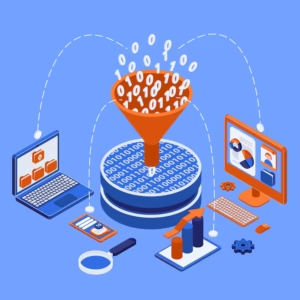
Optimizing sales funnels is crucial for enhancing conversion rates in logistics businesses. By analyzing data at each stage of the funnel, we can identify where potential customers are dropping off and why. This insight allows us to make informed adjustments that guide users more effectively toward conversion.
Identifying and Addressing Pain Points
For instance, if we observe that users are abandoning their carts at a high rate during the payment stage, it may indicate issues with payment options or security concerns. By addressing these issues—such as offering multiple payment methods or enhancing security features—we can create a more trustworthy environment that encourages users to complete their purchases.
Continuous Monitoring and Optimization
Continuous monitoring and optimization of our sales funnels ensure that we are maximizing every opportunity for conversion. By regularly analyzing data and making adjustments, we can refine our sales funnels to better meet the needs of our customers and ultimately drive business growth.
Measuring and Tracking CRO Success with Data Metrics
To gauge the effectiveness of our CRO strategies, it is essential to measure and track success using relevant data metrics. Key performance indicators (KPIs) such as conversion rates, bounce rates, and average order value provide valuable insights into how well our strategies are performing. By regularly reviewing these metrics, we can assess whether our efforts are yielding the desired results or if adjustments are necessary.
Additionally, setting up tracking mechanisms allows us to monitor user behavior over time. Tools like heatmaps can visually represent how users interact with our website, highlighting areas of interest and potential confusion. This data-driven approach enables us to make informed decisions about where to focus our optimization efforts for maximum impact.
The Future of CRO Strategies in Logistics: Data-Driven Innovations
As we look toward the future of CRO strategies in logistics, it is clear that data-driven innovations will continue to shape the industry landscape. Emerging technologies such as artificial intelligence and machine learning offer exciting possibilities for enhancing our CRO efforts. These technologies enable us to analyze vast amounts of data quickly and accurately, uncovering insights that were previously unattainable.
Moreover, as customer expectations evolve, so too must our approaches to CRO. The integration of real-time data analytics will allow us to respond dynamically to changing market conditions and customer preferences. By staying ahead of trends and embracing innovation, we position ourselves as leaders in the logistics sector—ready to meet the demands of an increasingly data-driven world.
In conclusion, the importance of data in shaping effective CRO strategies cannot be overstated. By collecting and analyzing relevant data, identifying conversion roadblocks, implementing solutions, personalizing user experiences, optimizing sales funnels, measuring success metrics, and embracing future innovations, we can significantly enhance our conversion rates in the logistics industry. As we continue on this journey, let us remain committed to leveraging data as a powerful tool for growth and success in an ever-competitive market.
If you’re interested in understanding how Techno Softwares leverages data to enhance conversion rate optimization (CRO) for logistics businesses, you might also find value in exploring how a web development company can assist your business in broader terms. Techno Softwares provides insights on how professional web development can transform your business operations and digital presence, which is crucial for implementing effective CRO strategies. For more detailed information, you can read about it in their article How a Web Development Company Can Assist Your Business. This piece elaborates on the role of tailored web solutions in achieving business goals, which complements the data-driven approaches discussed in the CRO strategies article.
FAQs
What is CRO in the context of logistics businesses?
CRO stands for Conversion Rate Optimization, which is the process of increasing the percentage of website visitors who take a desired action, such as making a purchase or filling out a contact form, for logistics businesses.
How does Techno Softwares use data to drive CRO strategies for logistics businesses?
Techno Softwares uses data analysis to identify patterns and trends in user behavior on logistics websites, and then uses this information to make informed decisions about how to optimize the website for higher conversion rates.
What types of data does Techno Softwares analyze for CRO strategies?
Techno Softwares analyzes a variety of data, including website traffic, user engagement metrics, conversion rates, and customer feedback, to inform their CRO strategies for logistics businesses.
What are some common CRO strategies used by Techno Softwares for logistics businesses?
Some common CRO strategies used by Techno Softwares for logistics businesses include A/B testing, improving website usability, optimizing call-to-action buttons, and personalizing the user experience based on data insights.
How does CRO benefit logistics businesses?
CRO can benefit logistics businesses by increasing the likelihood of website visitors taking desired actions, such as requesting a quote or booking a service, ultimately leading to higher conversion rates and increased revenue.


