

How to Enhance App Performance Using Artificial Intelligence
In the rapidly evolving landscape of technology, the performance of applications has become a critical factor in determining their success. As we navigate through an era where user expectations are at an all-time high, the need for seamless, efficient, and responsive applications is paramount. This is where artificial intelligence (AI) steps in as a game-changer.
By leveraging AI, we can enhance app performance in ways that were previously unimaginable. The integration of AI not only optimizes the functionality of applications but also provides insights that help us understand user behavior and preferences. As we delve deeper into the realm of app performance enhancement, it becomes evident that AI is not merely a tool but a transformative force.
It empowers us to analyze vast amounts of data in real-time, enabling us to make informed decisions that can significantly improve the user experience. From predictive analytics to automated troubleshooting, AI offers a plethora of solutions that can elevate our applications to new heights. In this article, we will explore the myriad benefits of integrating AI into app performance enhancement, the techniques available, and how we can effectively implement these strategies to ensure our applications remain competitive and user-friendly.
Key Takeaways
- AI can significantly enhance app performance by analyzing data and making real-time adjustments.
- Integrating AI in your app can lead to improved user experience, increased efficiency, and better decision-making.
- Choosing the right AI techniques, such as machine learning or natural language processing, is crucial for app performance enhancement.
- Techno Softwares’ approach to implementing AI in apps involves thorough analysis, strategic planning, and seamless integration.
- Monitoring and analyzing app performance with AI allows for proactive problem-solving and continuous improvement.
Understanding the Benefits of Integrating AI in Your App
Integrating AI into our applications brings forth a multitude of benefits that can significantly enhance performance. One of the most notable advantages is the ability to process and analyze data at an unprecedented scale. With AI algorithms, we can sift through large datasets to identify patterns and trends that would be impossible for humans to discern.
This capability allows us to make data-driven decisions that can optimize app functionality and improve overall performance. Moreover, AI enhances predictive capabilities, enabling us to anticipate user needs and behaviors. By analyzing historical data, AI can forecast potential issues before they arise, allowing us to proactively address them.
This not only minimizes downtime but also enhances user satisfaction by ensuring a smooth and uninterrupted experience. Additionally, AI can facilitate personalized experiences by tailoring content and features to individual users based on their preferences and usage patterns. This level of customization fosters user engagement and loyalty, ultimately driving the success of our applications.
Choosing the Right AI Techniques for App Performance Enhancement
When it comes to enhancing app performance through AI, selecting the appropriate techniques is crucial. We have a variety of options at our disposal, each with its unique strengths and applications. Machine learning, for instance, is a powerful technique that allows us to create models capable of learning from data and improving over time.
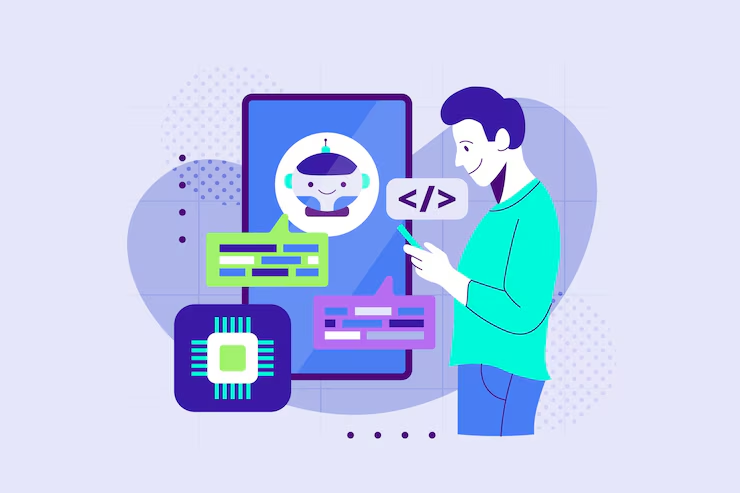
By implementing machine learning algorithms, we can optimize resource allocation, enhance load balancing, and even predict user behavior with remarkable accuracy. Another technique worth considering is natural language processing (NLP), which enables our applications to understand and respond to human language. By integrating NLP, we can enhance user interactions through chatbots or voice-activated features, making our apps more intuitive and user-friendly.
Additionally, computer vision can be employed in applications that require image recognition or analysis, further broadening the scope of what we can achieve with AI. Ultimately, the choice of techniques will depend on our specific goals and the nature of our applications, but understanding these options is essential for effective implementation.
Implementing AI in Your App: Techno Softwares’ Approach
At Techno Softwares, we believe that a structured approach to implementing AI in app performance enhancement is vital for achieving optimal results. Our process begins with a thorough assessment of the existing application infrastructure and identifying areas where AI can add value. This initial evaluation allows us to pinpoint specific performance bottlenecks and user pain points that need addressing.
Once we have established a clear understanding of our objectives, we move on to selecting the appropriate AI techniques tailored to our needs. Our team collaborates closely with stakeholders to ensure alignment on goals and expectations. After selecting the right tools and techniques, we proceed with the integration process, which involves developing algorithms, training models, and testing their effectiveness in real-world scenarios.
Throughout this phase, we prioritize transparency and communication with our clients to ensure they are informed and engaged in the process.
Monitoring and Analyzing App Performance with AI
Monitoring app performance is an ongoing endeavor that requires constant attention and analysis. With AI at our disposal, we can automate much of this process, allowing us to focus on strategic decision-making rather than manual data collection. By employing AI-driven analytics tools, we can continuously track key performance indicators (KPIs) such as load times, crash rates, and user engagement metrics.
These tools not only provide real-time insights but also generate predictive analytics that help us foresee potential issues before they escalate. For instance, if an application experiences a sudden spike in traffic, AI can analyze historical data to predict how this surge might impact performance and suggest necessary adjustments. This proactive approach enables us to maintain optimal performance levels while minimizing disruptions for users.
Improving User Experience through AI-driven App Performance Enhancement

Enhancing user experience is at the heart of app performance improvement efforts. With AI-driven enhancements, we can create applications that are not only faster but also more intuitive and engaging. By analyzing user behavior patterns, we can identify areas where users may encounter difficulties or frustrations and address these issues proactively.
For example, AI can help streamline navigation by suggesting personalized content based on user preferences or previous interactions. This level of customization fosters a sense of connection between users and the application, making them more likely to return. Additionally, by utilizing AI-powered chatbots for customer support, we can provide instant assistance to users, further enhancing their experience.
Ultimately, our goal is to create an environment where users feel valued and understood, leading to increased satisfaction and loyalty.
Case Studies: Successful Integration of AI in App Performance Enhancement
To illustrate the effectiveness of integrating AI into app performance enhancement, we can look at several successful case studies from various industries. One notable example is a leading e-commerce platform that implemented machine learning algorithms to optimize its recommendation engine. By analyzing user behavior and purchase history, the platform was able to provide personalized product suggestions that significantly increased conversion rates and customer satisfaction.
Another compelling case involves a healthcare application that utilized natural language processing to improve patient interactions. By integrating an AI-driven chatbot capable of understanding medical queries, the application was able to provide timely responses and support for patients seeking information about their health conditions. This not only improved user engagement but also reduced the workload on healthcare professionals.
These case studies highlight how diverse industries can benefit from AI-driven app performance enhancements. By adopting similar strategies tailored to our specific needs, we too can achieve remarkable results.
Future Trends in AI for App Performance Enhancement
As we look ahead, it is clear that the role of AI in app performance enhancement will continue to evolve and expand. One emerging trend is the increasing use of edge computing in conjunction with AI technologies. By processing data closer to the source rather than relying solely on centralized servers, we can reduce latency and improve response times for users across various devices.
Additionally, advancements in explainable AI will play a crucial role in enhancing transparency and trust in AI-driven applications. As users become more aware of how their data is being utilized, providing clear explanations for AI decisions will be essential for fostering confidence in our applications. Furthermore, as machine learning models become more sophisticated, we can expect even greater levels of personalization in app experiences.
By harnessing the power of deep learning algorithms, we will be able to create highly tailored experiences that adapt in real-time based on user interactions. In conclusion, as we embrace these future trends and continue to innovate with AI technologies, we will undoubtedly unlock new possibilities for enhancing app performance and delivering exceptional user experiences. The journey toward optimizing our applications through AI is just beginning, and together we have the opportunity to shape its future.
If you are interested in learning more about enhancing your website’s performance, you may want to check out the article on how to optimize your website for mobile devices. This article provides valuable insights and tips on how to ensure your website is optimized for mobile users, ultimately improving user experience and increasing engagement. By implementing these strategies alongside integrating AI into your app, you can create a seamless and high-performing digital experience for your users.
FAQs
What is Artificial Intelligence (AI) and how can it enhance app performance?
Artificial Intelligence (AI) refers to the simulation of human intelligence processes by machines, especially computer systems. AI can enhance app performance by automating repetitive tasks, providing personalized user experiences, and improving decision-making processes.
What are some ways in which Techno Softwares can integrate AI into an app to enhance its performance?
Techno Softwares can integrate AI into an app by implementing machine learning algorithms for predictive analytics, natural language processing for chatbots and voice recognition, and computer vision for image and video analysis. These AI technologies can improve app performance by making it more efficient and user-friendly.
How can AI-powered features improve user engagement and retention in an app?
AI-powered features such as personalized recommendations, predictive analytics, and chatbots can improve user engagement and retention in an app by providing a more tailored and interactive experience for users. This can lead to increased user satisfaction and loyalty.
What are the potential benefits of integrating AI into an app for businesses?
Integrating AI into an app can provide businesses with benefits such as improved operational efficiency, better customer insights, enhanced decision-making capabilities, and the ability to offer more personalized and targeted services to users. This can ultimately lead to increased competitiveness and profitability for businesses.
What are some considerations to keep in mind when integrating AI into an app?
When integrating AI into an app, it is important to consider factors such as data privacy and security, ethical use of AI technologies, potential biases in AI algorithms, and the need for ongoing maintenance and updates to ensure the continued effectiveness of AI-powered features.


