


Maximizing Business Efficiency with ERP Software: Techno Softwares’ Expert Guide
In today’s fast-paced business environment, the need for efficiency has never been more critical. As we navigate through various operational challenges, we find that Enterprise Resource Planning (ERP) software plays a pivotal role in enhancing business efficiency. By integrating core business processes into a unified system, ERP software allows us to streamline operations, reduce redundancies, and improve overall productivity.
This holistic approach not only helps us manage resources more effectively but also provides real-time insights that are essential for making informed decisions. Moreover, ERP systems facilitate better coordination among different departments within our organization. When we utilize an ERP solution, we can ensure that all teams—from finance to human resources—are working with the same data and information.
This alignment minimizes the chances of miscommunication and errors, which can be costly in terms of both time and resources. As we embrace ERP software, we begin to see a transformation in how we operate, leading to enhanced efficiency and a stronger competitive edge in the marketplace.
Key Takeaways
- ERP software plays a crucial role in improving business efficiency by integrating and automating various processes.
- When choosing ERP software, it is important to consider the specific needs and requirements of the business to ensure a seamless fit.
- Implementing ERP software requires careful planning and integration to ensure a smooth transition and maximum efficiency.
- ERP software helps streamline business processes by centralizing data and providing real-time insights for better decision-making.
- Enhanced communication and collaboration are key benefits of ERP software, allowing for better coordination and teamwork within the organization.
Choosing the Right ERP Software for Your Business Needs
Selecting the right ERP software is a crucial step that can significantly impact our business operations. With a plethora of options available, we must carefully assess our specific needs and objectives before making a decision. It is essential to consider factors such as the size of our organization, industry requirements, and the unique challenges we face.
By conducting a thorough needs analysis, we can identify the features and functionalities that are most relevant to our operations, ensuring that the chosen ERP solution aligns with our strategic goals. Additionally, we should not overlook the importance of scalability when choosing an ERP system. As our business grows and evolves, our software must be able to adapt to changing demands.
We should look for solutions that offer flexibility and can accommodate future expansions or modifications without requiring a complete overhaul. Engaging with stakeholders across various departments during the selection process can also provide valuable insights into what features will be most beneficial, ultimately leading us to make a more informed choice.
Implementing ERP Software for Seamless Integration
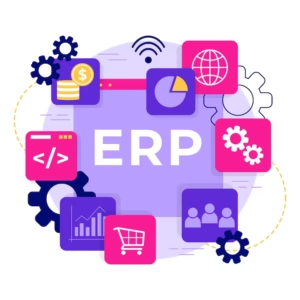
Once we have selected the appropriate ERP software, the next step is implementation. This phase is critical, as it determines how well the new system will integrate with our existing processes and technologies. To ensure a smooth transition, we must develop a comprehensive implementation plan that outlines key milestones, timelines, and responsibilities.
Engaging with experienced consultants or vendors can also provide us with the expertise needed to navigate potential challenges during this phase. Training our employees is another vital aspect of successful ERP implementation. We must invest time and resources into educating our team members about the new system’s functionalities and benefits.
By fostering a culture of openness and support, we can alleviate any apprehensions about the change and encourage our staff to embrace the new technology. A well-executed implementation not only enhances user adoption but also sets the foundation for maximizing the benefits of our ERP software in the long run.
Streamlining Business Processes with ERP Software
| Metrics | Data |
|---|---|
| Reduction in manual data entry | 30% |
| Improvement in order processing time | 50% |
| Decrease in inventory holding costs | 20% |
| Increase in on-time deliveries | 40% |
| Reduction in procurement cycle time | 25% |
One of the most significant advantages of ERP software is its ability to streamline business processes. By automating routine tasks and centralizing information, we can eliminate inefficiencies that often plague traditional workflows. For instance, with an integrated ERP system, we can automate order processing, inventory management, and financial reporting, allowing us to focus on more strategic initiatives rather than getting bogged down by manual tasks.
Furthermore, as we streamline our processes through ERP software, we gain greater visibility into our operations. This transparency enables us to identify bottlenecks and areas for improvement more easily. By analyzing workflows and performance metrics, we can make data-driven adjustments that enhance efficiency and drive better outcomes.
Ultimately, streamlining our business processes not only saves time and resources but also positions us for sustainable growth in an increasingly competitive landscape.
Enhancing Communication and Collaboration with ERP Software
Effective communication and collaboration are essential components of any successful organization. With ERP software, we can break down silos between departments and foster a more collaborative work environment. The centralized nature of ERP systems allows for seamless information sharing across teams, ensuring that everyone has access to the same data and insights.
This transparency promotes accountability and encourages cross-functional collaboration, which can lead to innovative solutions and improved problem-solving. Moreover, enhanced communication facilitated by ERP software can significantly improve project management and execution. With real-time updates and notifications, team members can stay informed about project statuses and deadlines, reducing the likelihood of miscommunication or delays.
As we leverage these capabilities, we create a more cohesive organizational culture where collaboration thrives, ultimately driving better results for our business.
Leveraging Data Analytics for Informed Decision Making
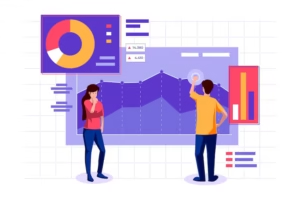
In an era where data is often referred to as the new oil, leveraging data analytics through our ERP software becomes paramount for informed decision-making. The ability to collect, analyze, and interpret vast amounts of data allows us to gain valuable insights into customer behavior, market trends, and operational performance. By utilizing these analytics tools within our ERP system, we can make strategic decisions based on empirical evidence rather than intuition alone.
Furthermore, data analytics empowers us to identify opportunities for growth and improvement that may have otherwise gone unnoticed. For instance, by analyzing sales data, we can pinpoint which products are performing well and which ones may need reevaluation or discontinuation. This proactive approach enables us to allocate resources more effectively and optimize our offerings to meet customer demands.
Ultimately, leveraging data analytics through our ERP software positions us to stay ahead of the competition and make decisions that drive long-term success.
Automating Routine Tasks for Increased Productivity
One of the most compelling benefits of implementing ERP software is its ability to automate routine tasks that consume valuable time and resources. By automating processes such as invoicing, payroll processing, and inventory tracking, we free up our employees to focus on higher-value activities that require creativity and critical thinking. This shift not only enhances productivity but also boosts employee morale as they engage in more meaningful work.
Additionally, automation reduces the risk of human error that often accompanies manual processes. With an ERP system in place, we can ensure greater accuracy in data entry and reporting, leading to more reliable outcomes. As we embrace automation within our organization, we create a culture of efficiency where employees are empowered to contribute their best work without being bogged down by repetitive tasks.
Measuring and Improving Business Performance with ERP Software
To truly harness the power of ERP software, we must continuously measure and improve our business performance. The analytics capabilities embedded within these systems allow us to track key performance indicators (KPIs) across various functions—be it sales growth, customer satisfaction, or operational efficiency. By regularly reviewing these metrics, we can identify trends and areas for improvement that inform our strategic planning.
Moreover, an iterative approach to performance measurement enables us to adapt quickly to changing market conditions or internal challenges. As we gather insights from our ERP system, we can implement targeted initiatives aimed at enhancing performance in specific areas. This commitment to continuous improvement not only drives operational excellence but also positions us as a forward-thinking organization ready to tackle future challenges head-on.
In conclusion, as we explore the multifaceted role of ERP software in enhancing business efficiency, it becomes clear that its benefits extend far beyond mere automation. From streamlining processes to fostering collaboration and leveraging data analytics for informed decision-making, ERP systems are integral to our success in today’s dynamic business landscape. By choosing the right solution and implementing it effectively, we can unlock new levels of productivity and performance that propel our organization toward sustained growth and success.
If you’re considering the benefits of ERP software for your business as discussed in our expert guide, you might also find value in exploring how integrating CRM systems with your eCommerce platform can enhance your operations. Specifically, our article on integrating CRM with your WooCommerce store dives into how such integrations can streamline customer interactions, improve data management, and ultimately boost sales efficiency. This is particularly useful for businesses looking to leverage their ERP software to its fullest potential by ensuring all customer-related data flows seamlessly across all business systems.
FAQs
What is ERP software?
ERP (Enterprise Resource Planning) software is a type of business management software that allows organizations to use a system of integrated applications to manage and automate many back office functions related to technology, services and human resources.
What are the benefits of using ERP software for businesses?
Some of the benefits of using ERP software for businesses include improved efficiency, better decision-making, streamlined processes, increased productivity, better data security, and improved customer service.
How does ERP software help in improving efficiency?
ERP software helps in improving efficiency by automating repetitive tasks, providing real-time data and insights, reducing manual data entry, and streamlining business processes.
What are the key features of ERP software?
Key features of ERP software include financial management, supply chain management, customer relationship management, human resources management, inventory management, and reporting and analytics.
How does ERP software improve decision-making?
ERP software improves decision-making by providing real-time data and insights, enabling better forecasting and planning, and facilitating collaboration and communication across different departments.
How does ERP software streamline processes?
ERP software streamlines processes by integrating different business functions and departments, automating workflows, and providing a centralized database for all business data.
How does ERP software improve customer service?
ERP software improves customer service by providing a 360-degree view of customer information, enabling faster response times, and improving order fulfillment and delivery processes.


