
Navigating Legacy Migration: Techno Softwares’ Solutions
In the ever-evolving landscape of technology, legacy systems represent a significant challenge for many organizations. These systems, often built on outdated technologies, have been in place for years, sometimes even decades. They serve critical functions within businesses, managing everything from customer data to financial transactions.
However, as we delve deeper into the digital age, the limitations of these systems become increasingly apparent. They are often inflexible, difficult to integrate with modern applications, and costly to maintain. Understanding the intricacies of legacy systems is essential for any organization looking to modernize its operations.
Legacy systems can be defined as any outdated computing system that is still in use, despite the availability of newer technologies. These systems may have been state-of-the-art at the time of their implementation, but as technology has advanced, they have become cumbersome and inefficient. The reliance on these systems can hinder an organization’s ability to innovate and adapt to changing market conditions.
As we navigate through this digital transformation era, it is crucial for us to recognize the importance of addressing legacy systems and the impact they have on overall business performance.
Key Takeaways
- Legacy systems refer to outdated software and hardware that are still in use within an organization.
- Challenges of legacy migration include compatibility issues, data migration, and the need for retraining staff.
- Techno Softwares’ approach to legacy migration involves a thorough assessment of the existing system, planning for migration, and implementation of the new system.
- Benefits of legacy migration include improved efficiency, reduced maintenance costs, and enhanced security.
- Steps for successful legacy migration include thorough planning, testing, and training for staff to ensure a smooth transition.
Challenges of Legacy Migration
Migrating from legacy systems is not a straightforward process; it comes with a myriad of challenges that organizations must navigate. One of the most significant hurdles we face is data integrity. Legacy systems often house vast amounts of data that may be poorly organized or even corrupted.
Ensuring that this data is accurately transferred to a new system without loss or corruption is a daunting task. Additionally, we must consider the compatibility of new technologies with existing data formats and structures, which can complicate the migration process further. Another challenge we encounter is the resistance to change within organizations.
Employees who have grown accustomed to legacy systems may be hesitant to adopt new technologies, fearing that they will disrupt established workflows. This resistance can lead to delays in migration and can even jeopardize the success of the project. Furthermore, the costs associated with migration can be substantial, encompassing not only the financial investment in new technologies but also the time and resources required for training staff and ensuring a smooth transition.
As we embark on legacy migration projects, we must be prepared to address these challenges head-on.
Techno Softwares’ Approach to Legacy Migration
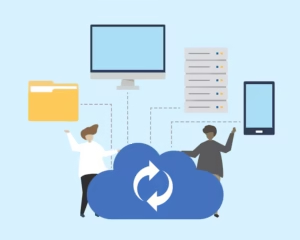
At Techno Softwares, we understand that a successful legacy migration requires a strategic and methodical approach. Our process begins with a comprehensive assessment of the existing legacy system. We analyze its architecture, data structures, and workflows to identify potential pitfalls and areas for improvement.
This thorough evaluation allows us to develop a tailored migration strategy that aligns with our clients’ specific needs and objectives. Once we have a clear understanding of the legacy system, we employ a phased migration approach. This involves breaking down the migration process into manageable stages, allowing us to test and validate each phase before moving on to the next.
By doing so, we minimize risks and ensure that any issues are addressed promptly. Our team also emphasizes collaboration with stakeholders throughout the migration process, ensuring that everyone is on board and informed every step of the way. This collaborative approach not only fosters buy-in from employees but also enhances the overall success of the migration project.
Benefits of Legacy Migration
| Benefits of Legacy Migration |
|---|
| Improved performance |
| Enhanced security |
| Cost savings |
| Scalability |
| Modern technology adoption |
The benefits of migrating from legacy systems are manifold and can significantly enhance an organization’s operational efficiency. One of the most immediate advantages we experience is improved performance. Modern systems are designed to handle larger volumes of data and transactions more efficiently than their predecessors.
This increased efficiency translates into faster processing times and improved service delivery for our clients. Moreover, migrating to contemporary systems opens up new opportunities for innovation. With access to advanced technologies such as cloud computing, artificial intelligence, and machine learning, organizations can leverage these tools to gain insights from their data and drive strategic decision-making.
Additionally, modern systems often come equipped with enhanced security features that protect sensitive information from cyber threats—a critical consideration in today’s digital landscape. By embracing legacy migration, we position ourselves not only for immediate gains but also for long-term growth and adaptability.
Steps for Successful Legacy Migration
To ensure a successful legacy migration, we must follow a structured set of steps that guide us through the process. The first step involves conducting a thorough analysis of the existing system and identifying its strengths and weaknesses. This assessment helps us determine which components are essential to retain and which can be discarded or replaced.
Next, we develop a detailed migration plan that outlines timelines, resource allocation, and risk management strategies. This plan serves as a roadmap for the entire migration process, ensuring that all stakeholders are aligned and aware of their responsibilities. Following this, we initiate the actual migration process, which may involve data extraction, transformation, and loading (ETL) into the new system.
Throughout this phase, continuous testing is crucial to identify any issues early on. Once the migration is complete, we focus on post-migration support and training for employees. This step is vital in ensuring that users are comfortable with the new system and can leverage its capabilities effectively.
By providing ongoing support and resources, we help facilitate a smooth transition and maximize the benefits of the new technology.
Case Studies of Successful Legacy Migration Projects

Our experience at Techno Softwares has provided us with numerous case studies showcasing successful legacy migration projects across various industries. One notable example involved a financial institution struggling with an outdated core banking system that hindered its ability to offer competitive services. Through our comprehensive assessment and phased migration approach, we successfully transitioned them to a modern cloud-based platform.
This not only improved their operational efficiency but also enabled them to introduce innovative financial products that attracted new customers. Another case study involved a healthcare provider facing challenges with patient data management due to an aging electronic health record (EHR) system. We collaborated closely with their team to migrate their data to a more robust EHR solution that integrated seamlessly with other healthcare applications.
The result was enhanced patient care through improved data accessibility and streamlined workflows for healthcare professionals. These case studies illustrate our commitment to delivering tailored solutions that address specific organizational needs while driving meaningful results.
Techno Softwares’ Tools and Technologies for Legacy Migration
At Techno Softwares, we leverage a suite of advanced tools and technologies designed specifically for legacy migration projects. Our proprietary migration platform facilitates seamless data extraction, transformation, and loading processes while ensuring data integrity throughout the transition. This platform is equipped with automated testing capabilities that allow us to identify potential issues before they escalate into significant problems.
Additionally, we utilize cloud-based solutions that provide scalability and flexibility during the migration process. By harnessing cloud technology, we can easily accommodate varying data volumes and ensure that our clients have access to their information anytime, anywhere. Our team also stays abreast of emerging technologies such as artificial intelligence and machine learning, which we integrate into our migration strategies to enhance data analysis capabilities post-migration.
Future Trends in Legacy Migration
As we look ahead, several trends are shaping the future of legacy migration that we must consider as organizations continue their digital transformation journeys. One prominent trend is the increasing adoption of cloud-native solutions. As more businesses recognize the benefits of cloud computing—such as scalability, cost-effectiveness, and enhanced security—legacy migrations will increasingly focus on transitioning to cloud-based platforms.
Another trend is the growing emphasis on automation in migration processes. With advancements in artificial intelligence and machine learning, organizations can automate various aspects of legacy migration, from data mapping to testing procedures. This not only accelerates the migration timeline but also reduces human error, leading to more successful outcomes.
Finally, as cybersecurity threats continue to evolve, organizations will prioritize security during legacy migrations more than ever before. Ensuring that sensitive data is protected throughout the transition will be paramount in maintaining trust with customers and stakeholders alike. In conclusion, understanding legacy systems and navigating their migration presents both challenges and opportunities for organizations today.
At Techno Softwares, we are committed to guiding our clients through this complex landscape with tailored strategies that leverage modern technologies while addressing their unique needs. As we embrace future trends in legacy migration, we remain dedicated to helping businesses thrive in an increasingly digital world.
When discussing the challenges of legacy migration, it’s crucial to understand the strategies and solutions that can facilitate this complex process. An insightful resource that complements this topic is an article by Techno Softwares, which delves into the intricacies of WooCommerce development. Although primarily focused on e-commerce solutions, the principles discussed can be extrapolated to broader IT solutions, including legacy system upgrades and migrations. For a deeper understanding of how Techno Softwares approaches such complex IT challenges, you can read more on their WooCommerce development company guide. This guide not only explores development strategies but also sheds light on overcoming technical hurdles, which is essential knowledge for handling legacy migrations effectively.
FAQs
What are the challenges of legacy migration?
Legacy migration poses several challenges such as outdated technology, lack of documentation, complex business logic, and potential data loss during the migration process.
How does Techno Softwares overcome these challenges?
Techno Softwares overcomes legacy migration challenges by conducting a thorough analysis of the existing system, creating a detailed migration plan, using advanced tools and technologies, and ensuring data integrity throughout the migration process.
What are the benefits of migrating from legacy systems?
Migrating from legacy systems can result in improved performance, enhanced security, reduced maintenance costs, increased scalability, and better integration with modern technologies.
How long does the legacy migration process take?
The duration of the legacy migration process varies depending on the complexity of the existing system, the amount of data to be migrated, and the specific requirements of the new system. Techno Softwares aims to minimize downtime and ensure a smooth transition during the migration process.
What industries can benefit from legacy migration services?
Legacy migration services can benefit a wide range of industries including finance, healthcare, manufacturing, retail, and government sectors. Any organization with outdated systems can benefit from legacy migration to improve efficiency and competitiveness.


