

Role of AI and Machine Learning in Healthcare Software Development
As we delve into the realm of healthcare, we find ourselves at the intersection of technology and medicine, where artificial intelligence (AI) and machine learning (ML) are revolutionizing the way we approach patient care and medical research. The integration of these advanced technologies into healthcare software development is not merely a trend; it represents a paradigm shift that promises to enhance efficiency, accuracy, and overall patient outcomes. By harnessing vast amounts of data, AI and ML enable healthcare professionals to make informed decisions, predict patient needs, and streamline operations in ways that were previously unimaginable.
In recent years, the healthcare industry has witnessed an exponential growth in data generation, from electronic health records to wearable health devices. This surge in data presents both opportunities and challenges. We are now equipped with the tools to analyze this information effectively, allowing us to uncover patterns and insights that can lead to improved diagnostics and personalized treatment plans.
As we explore the implications of AI and ML in healthcare software development, it becomes clear that these technologies are not just enhancing existing processes but are also paving the way for innovative solutions that can transform patient care.
Key Takeaways
- AI and machine learning are revolutionizing healthcare software development by enabling advanced data analysis and predictive modeling.
- The impact of AI and machine learning on healthcare includes improved diagnostics, personalized treatment plans, and operational efficiency.
- Advantages of using AI and machine learning in healthcare software development include enhanced decision-making, early disease detection, and cost savings.
- Challenges and limitations of integrating AI and machine learning in healthcare include data privacy concerns, algorithm bias, and regulatory hurdles.
- Ethical and legal considerations in AI and machine learning for healthcare encompass patient consent, transparency, and accountability in algorithmic decision-making.
The Impact of AI and Machine Learning on Healthcare
The impact of AI and machine learning on healthcare is profound and multifaceted. One of the most significant contributions of these technologies is their ability to analyze large datasets quickly and accurately. This capability allows healthcare providers to identify trends and anomalies in patient data, leading to earlier diagnoses and more effective treatment strategies.
For instance, machine learning algorithms can sift through thousands of medical images to detect signs of diseases such as cancer at stages when they are most treatable. This not only improves patient outcomes but also reduces the burden on healthcare systems by minimizing the need for more invasive procedures. Moreover, AI-driven predictive analytics can enhance patient management by anticipating potential health issues before they arise.
By analyzing historical data, these systems can identify patients at risk for conditions such as diabetes or heart disease, enabling proactive interventions. This shift from reactive to preventive care is a game-changer in healthcare, as it emphasizes wellness and early detection rather than merely treating illnesses after they occur. As we continue to embrace these technologies, we are likely to see a significant reduction in hospital readmissions and overall healthcare costs.
Advantages of Using AI and Machine Learning in Healthcare Software Development
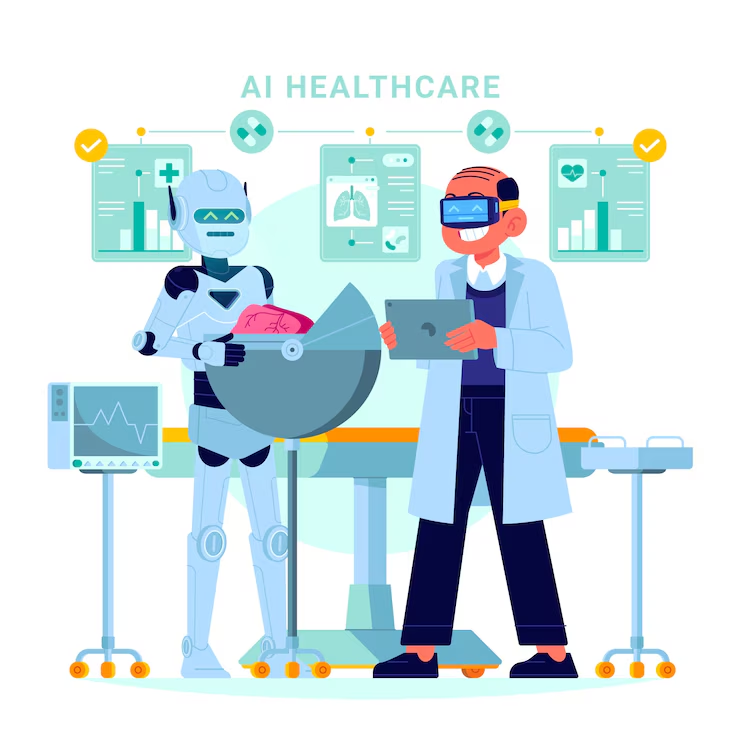
The advantages of incorporating AI and machine learning into healthcare software development are numerous and compelling. One of the primary benefits is the enhancement of clinical decision-making. With AI tools providing real-time data analysis and recommendations, healthcare professionals can make more informed choices regarding patient care.
This not only improves the quality of care but also increases the efficiency of healthcare delivery, allowing providers to focus more on patient interaction rather than administrative tasks. Additionally, AI and ML can significantly improve operational efficiency within healthcare organizations. By automating routine tasks such as appointment scheduling, billing, and patient follow-ups, these technologies free up valuable time for healthcare staff.
This increased efficiency can lead to reduced wait times for patients and a more streamlined workflow for providers. Furthermore, AI can assist in resource allocation by predicting patient volumes and optimizing staff schedules, ensuring that healthcare facilities are adequately prepared to meet demand.
Challenges and Limitations of Integrating AI and Machine Learning in Healthcare
Despite the promising advantages of AI and machine learning in healthcare software development, we must also acknowledge the challenges and limitations that accompany their integration. One significant hurdle is the quality and availability of data. For AI algorithms to function effectively, they require access to high-quality, diverse datasets.
However, many healthcare organizations struggle with data silos, where information is fragmented across different systems or departments. This lack of interoperability can hinder the development of robust AI solutions that rely on comprehensive data analysis. Another challenge lies in the complexity of healthcare environments.
The nuances of patient care, including individual preferences, cultural factors, and varying clinical practices, make it difficult for AI systems to provide universally applicable solutions. Additionally, there is a risk of over-reliance on technology, where healthcare professionals may defer too much to AI recommendations without applying their clinical judgment. Striking a balance between leveraging AI capabilities and maintaining human oversight is crucial to ensuring that patient care remains personalized and effective.
Ethical and Legal Considerations in AI and Machine Learning for Healthcare
As we navigate the integration of AI and machine learning into healthcare, ethical and legal considerations come to the forefront. One primary concern is patient privacy and data security. The use of AI often involves processing sensitive health information, raising questions about how this data is stored, shared, and protected.
We must ensure that robust security measures are in place to safeguard patient information from breaches or unauthorized access. Moreover, there are ethical implications surrounding bias in AI algorithms. If the data used to train these systems is not representative of diverse populations, there is a risk that AI could perpetuate existing disparities in healthcare outcomes.
It is essential for developers to prioritize fairness and inclusivity when designing AI solutions, ensuring that they serve all patients equitably. Additionally, transparency in how AI systems make decisions is vital; patients should be informed about how their data is used and how AI contributes to their care.
Future Trends and Innovations in AI and Machine Learning for Healthcare Software Development
Looking ahead, we can anticipate several exciting trends and innovations in the realm of AI and machine learning for healthcare software development. One promising area is the advancement of natural language processing (NLP), which enables machines to understand and interpret human language. This technology has the potential to revolutionize clinical documentation by allowing healthcare providers to dictate notes or queries that are automatically transcribed into electronic health records.
Such innovations could significantly reduce administrative burdens while improving accuracy in patient documentation. Another trend we foresee is the increased use of AI-driven telemedicine solutions. As remote care becomes more prevalent, integrating AI into telehealth platforms can enhance patient engagement through personalized recommendations based on real-time data analysis.
For instance, wearable devices could continuously monitor patients’ vital signs and alert healthcare providers if any concerning patterns emerge. This proactive approach not only improves patient outcomes but also fosters a more collaborative relationship between patients and their care teams.
Case Studies of Successful Implementation of AI and Machine Learning in Healthcare
To illustrate the transformative potential of AI and machine learning in healthcare software development, we can examine several case studies that highlight successful implementations. One notable example is the use of IBM Watson in oncology. By analyzing vast amounts of medical literature alongside patient data, Watson assists oncologists in identifying personalized treatment options for cancer patients.
This innovative approach has led to improved treatment plans tailored to individual needs, showcasing how AI can enhance clinical decision-making. Another compelling case study involves the use of machine learning algorithms at Mount Sinai Health System in New York City. The organization developed an AI model that predicts which patients are at risk for hospital readmission within 30 days post-discharge.
By identifying high-risk patients early on, healthcare providers can implement targeted interventions to prevent readmissions, ultimately improving patient outcomes while reducing costs for the healthcare system.
The Potential of AI and Machine Learning to Transform Healthcare
In conclusion, as we reflect on the potential of AI and machine learning to transform healthcare software development, it becomes evident that these technologies hold immense promise for improving patient care and operational efficiency. While challenges remain—such as data quality issues, ethical considerations, and the need for human oversight—the benefits far outweigh the obstacles. By embracing innovation and prioritizing collaboration among stakeholders, we can harness the power of AI to create a more effective, equitable, and responsive healthcare system.
As we move forward into this new era of healthcare technology, it is crucial for us to remain vigilant about ethical practices while fostering an environment that encourages continuous learning and adaptation. The future of healthcare lies not only in advanced algorithms but also in our commitment to using these tools responsibly for the betterment of all patients. Together, we have the opportunity to shape a healthier future through the thoughtful integration of AI and machine learning into our healthcare systems.
In exploring the integration of AI and machine learning within healthcare software development, it’s also beneficial to consider how these technologies can be supported by robust front-end frameworks. A related article that delves into creating scalable and maintainable front-end architectures using ReactJS can be found here. This piece discusses how ReactJS can be utilized to build dynamic and responsive user interfaces, which is crucial for healthcare applications that require real-time data presentation and interactive features. Understanding these front-end development strategies can enhance the effectiveness of AI-driven healthcare applications, ensuring they are not only powerful in data processing but also user-friendly and accessible.
FAQs
What is AI and machine learning in healthcare software development?
AI (Artificial Intelligence) and machine learning are technologies that enable computers to learn from and make decisions based on data without being explicitly programmed. In healthcare software development, these technologies are used to analyze large amounts of medical data, identify patterns, and make predictions to improve patient care and outcomes.
How is AI and machine learning used in healthcare software development?
AI and machine learning are used in healthcare software development to assist with tasks such as medical imaging analysis, predictive analytics for patient outcomes, personalized treatment recommendations, and administrative automation. These technologies can also help in drug discovery and clinical trial optimization.
What are the benefits of using AI and machine learning in healthcare software development?
The use of AI and machine learning in healthcare software development can lead to improved accuracy and efficiency in medical diagnosis, personalized treatment plans, early disease detection, and better patient outcomes. These technologies can also help in reducing healthcare costs and improving overall healthcare delivery.
What are the challenges of implementing AI and machine learning in healthcare software development?
Challenges in implementing AI and machine learning in healthcare software development include ensuring data privacy and security, addressing regulatory and ethical considerations, integrating these technologies with existing healthcare systems, and gaining acceptance and trust from healthcare professionals and patients.
What are some examples of AI and machine learning applications in healthcare software development?
Examples of AI and machine learning applications in healthcare software development include medical image analysis for diagnosing diseases, predictive analytics for identifying patients at risk of certain conditions, natural language processing for extracting information from medical records, and virtual health assistants for patient engagement and support.


