

Scaling Your Shopify Store: A Guide for Growing Businesses
As we embark on our journey to scale our Shopify store, it becomes crucial to recognize the significance of this endeavor. Scaling is not merely about increasing sales; it encompasses a holistic approach to enhancing our business operations, customer experience, and overall brand presence. When we think about scaling, we envision a future where our store can handle increased traffic, manage larger inventories, and provide exceptional service to a growing customer base.
This vision is essential because it allows us to prepare for the inevitable growth that comes with success. Moreover, scaling our Shopify store means positioning ourselves strategically in a competitive market. As we expand, we must ensure that our brand stands out and resonates with our target audience.
This requires us to not only focus on sales figures but also on building a loyal customer base that trusts and values our offerings. By understanding the importance of scaling, we can create a roadmap that guides us through the complexities of growth while maintaining the integrity of our brand and the quality of our products.
Key Takeaways
- Scaling your Shopify store is crucial for long-term success and increased profitability.
- Setting clear and achievable goals for growth will help you stay focused and motivated.
- Optimizing your website for increased traffic through SEO and user experience improvements is essential for attracting more customers.
- Implementing effective marketing strategies such as social media advertising and email campaigns can help you reach a wider audience.
- Streamlining your operations for efficiency by automating repetitive tasks and optimizing your supply chain can save time and resources.
Setting Clear Goals for Growth
Establishing Clear Goals for Scalability
To effectively scale our Shopify store, we must first establish clear and measurable goals. These goals serve as the foundation upon which we build our growth strategy. By defining what success looks like for us—whether it’s increasing revenue by a certain percentage, expanding our customer base, or launching new products—we create a focused direction for our efforts.
Setting Specific Targets for Growth
Setting specific targets allows us to track our progress and make informed decisions along the way. In addition to setting quantitative goals, we should also consider qualitative objectives that enhance our brand’s reputation and customer satisfaction. For instance, we might aim to improve our customer service response time or increase our social media engagement.
Achieving Sustainable Growth
By balancing both types of goals, we can ensure that our growth is sustainable and aligned with our overall vision for the business. This dual approach not only motivates us but also provides a comprehensive framework for evaluating our success as we scale.
Evaluating Success and Motivation
By having a clear understanding of what we want to achieve and how we plan to get there, we can stay focused and motivated throughout the scaling process. This approach enables us to make adjustments as needed and celebrate our successes along the way.
Optimizing Your Website for Increased Traffic
As we look to scale our Shopify store, optimizing our website becomes a critical step in attracting more visitors. A well-optimized website enhances user experience, which is essential for converting visitors into customers. We should start by ensuring that our site is mobile-friendly, as an increasing number of consumers shop using their smartphones.
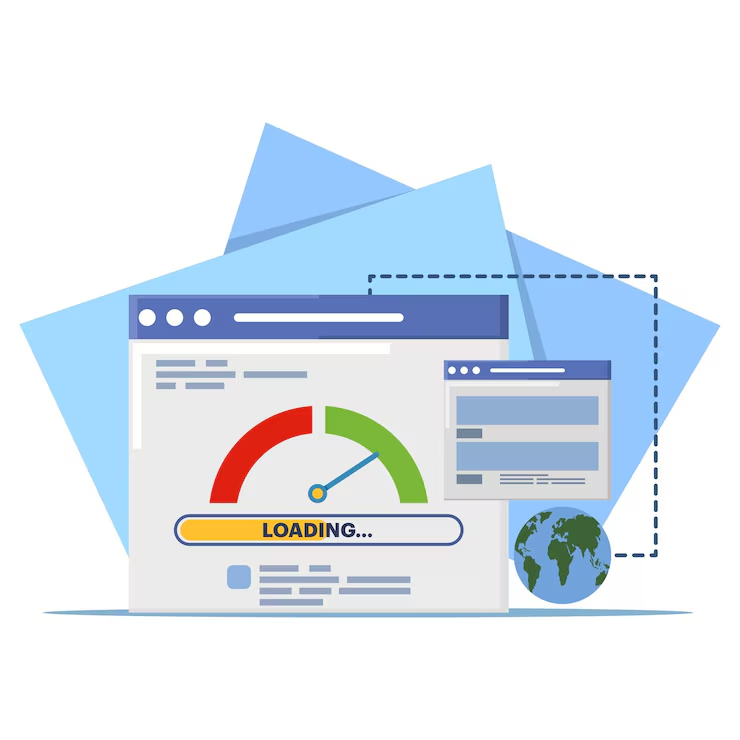
A responsive design not only improves accessibility but also boosts our search engine rankings, making it easier for potential customers to find us. In addition to mobile optimization, we must focus on improving site speed and navigation. A slow-loading website can deter potential buyers and lead to high bounce rates.
By streamlining our site’s performance and ensuring intuitive navigation, we create an environment where customers can easily browse and make purchases. Furthermore, incorporating high-quality images and compelling product descriptions can significantly enhance the shopping experience, encouraging visitors to stay longer and explore more of what we have to offer.
Implementing Effective Marketing Strategies
With a solid website in place, we can turn our attention to marketing strategies that will drive traffic and increase sales. Digital marketing offers a plethora of avenues for reaching our target audience, from social media advertising to email campaigns. We should consider leveraging platforms like Facebook and Instagram to showcase our products visually and engage with potential customers directly.
By creating eye-catching ads and utilizing targeted demographics, we can effectively reach those most likely to be interested in our offerings. Additionally, content marketing plays a vital role in establishing our brand as an authority in our niche. By creating valuable content—such as blog posts, videos, or infographics—we can attract organic traffic while providing useful information to our audience.
This not only helps in building trust but also encourages repeat visits to our site. As we implement these marketing strategies, it’s essential to remain adaptable and continuously analyze their effectiveness, allowing us to refine our approach based on what resonates most with our audience.
Streamlining Your Operations for Efficiency
As we scale our Shopify store, streamlining operations becomes paramount to managing increased demand without compromising quality. We should evaluate every aspect of our business processes—from inventory management to order fulfillment—to identify areas where efficiency can be improved. Implementing inventory management software can help us keep track of stock levels in real-time, reducing the risk of overselling or running out of popular items.
Moreover, optimizing our order fulfillment process is crucial for maintaining customer satisfaction. We might consider partnering with third-party logistics providers or utilizing dropshipping methods to handle shipping more effectively. By outsourcing these tasks, we can focus on other critical areas of growth while ensuring that orders are processed quickly and accurately.
Streamlining operations not only enhances productivity but also allows us to allocate resources more effectively as we scale.
Leveraging Technology and Automation

Embracing Automation for Efficiency
In today’s fast-paced digital landscape, leveraging technology and automation is crucial for scaling our Shopify store efficiently. We should explore various tools and software that can automate repetitive tasks, such as email marketing campaigns or social media posting schedules. By automating these processes, we free up valuable time that can be redirected toward strategic planning and creative initiatives.
Unlocking Insights with Analytics Tools
Utilizing analytics tools can provide us with valuable insights into customer behavior and sales trends. By analyzing this data, we can make informed decisions about product offerings, pricing strategies, and marketing efforts.
Staying Ahead of the Competition
Technology not only enhances efficiency but also empowers us to stay ahead of the competition by adapting quickly to market changes and consumer preferences. By embracing automation and analytics, we can position our Shopify store for long-term success and growth.
Expanding Your Product Line and Diversifying Offerings
As we scale our Shopify store, expanding our product line becomes an exciting opportunity for growth. By introducing new products or variations of existing ones, we can cater to a broader audience and meet diverse customer needs. However, it’s essential to conduct thorough market research before launching new offerings to ensure they align with current trends and customer preferences.
Diversifying our offerings can also involve exploring complementary products that enhance the overall shopping experience for our customers. For instance, if we sell fitness apparel, adding accessories like water bottles or yoga mats could attract more buyers looking for a complete workout solution. This strategy not only increases average order value but also positions us as a one-stop shop for customers seeking related products.
Tracking and Analyzing Key Metrics for Continued Growth
Finally, as we scale our Shopify store, tracking and analyzing key metrics is vital for sustaining growth over time. We should establish a set of performance indicators—such as conversion rates, customer acquisition costs, and average order value—that provide insights into how well our strategies are working. Regularly reviewing these metrics allows us to identify trends and make data-driven decisions that propel us forward.
Moreover, gathering customer feedback through surveys or reviews can offer invaluable insights into their experiences with our brand. By understanding what resonates with our audience and where improvements are needed, we can refine our offerings and enhance customer satisfaction. This continuous cycle of tracking performance and adapting strategies ensures that we remain agile in a dynamic market while fostering long-term growth for our Shopify store.
In conclusion, scaling our Shopify store is an intricate process that requires careful planning and execution across various facets of the business. By understanding the importance of scaling, setting clear goals, optimizing our website, implementing effective marketing strategies, streamlining operations, leveraging technology, expanding product lines, and tracking key metrics, we position ourselves for sustained success in the competitive e-commerce landscape. As we navigate this journey together, each step taken will bring us closer to realizing the full potential of our Shopify store.
If you are looking to expand your Shopify store and need help with migration logistics operations, Techno Softwares has you covered. Their article on migration logistics operations provides valuable insights and tips for businesses looking to streamline their operations and scale efficiently. With their expertise in app development, including Flutter and iPhone application development, Techno Softwares is the perfect partner to help take your Shopify store to the next level.
FAQs
What is Shopify?
Shopify is a popular e-commerce platform that allows businesses to create and manage online stores. It provides a range of tools and features to help businesses sell products and services online.
What does it mean to scale a Shopify store?
Scaling a Shopify store refers to the process of growing and expanding the business to handle increased sales, traffic, and customer demand. This may involve optimizing the website, improving logistics and fulfillment, and implementing strategies to attract more customers.
Why is scaling important for growing businesses?
Scaling is important for growing businesses because it allows them to meet the demands of a larger customer base, increase revenue, and expand their market reach. It also helps businesses to remain competitive and sustainable in the long term.
What are some strategies for scaling a Shopify store?
Some strategies for scaling a Shopify store include optimizing the website for performance and user experience, implementing efficient logistics and fulfillment processes, expanding product offerings, and investing in marketing and customer acquisition.
How can Techno Softwares help in scaling a Shopify store?
Techno Softwares is a professional e-commerce development company that offers a range of services to help businesses scale their Shopify stores. This may include website optimization, custom app development, marketing strategies, and ongoing support and maintenance.


