
The Benefits of Customizing Your ERP System
In today’s fast-paced business environment, the quest for increased efficiency and productivity is more critical than ever. We find ourselves constantly seeking ways to optimize our operations and maximize output. By implementing advanced technologies and innovative practices, we can significantly reduce the time spent on repetitive tasks, allowing us to focus on more strategic initiatives.
Automation tools, for instance, enable us to streamline mundane processes, freeing up valuable human resources to engage in creative problem-solving and high-level decision-making. This shift not only enhances our productivity but also fosters a culture of innovation within our teams. Moreover, as we embrace a more efficient operational model, we witness a remarkable improvement in employee morale.
When our team members are relieved from monotonous tasks, they tend to feel more empowered and motivated. This newfound enthusiasm translates into higher levels of engagement and collaboration, which are essential for driving organizational success. By prioritizing efficiency, we create an environment where everyone can contribute their best work, ultimately leading to enhanced overall performance and achievement of our business goals.
Key Takeaways
- Implementing automation and technology can lead to increased efficiency and productivity in the workplace.
- Streamlining processes and workflows through technology can help in saving time and resources.
- Enhanced data accuracy and reporting can be achieved through the use of advanced software and tools.
- Improving customer and supplier relationships can be facilitated by leveraging technology for better communication and collaboration.
- Scalability and flexibility are key benefits of adopting technology, allowing businesses to adapt to changing needs and demands.
Streamlined Processes and Workflows
Streamlining processes and workflows is a fundamental aspect of modern business management that we cannot overlook. By analyzing our existing workflows, we can identify bottlenecks and redundancies that hinder our progress. Implementing process mapping techniques allows us to visualize each step in our operations, enabling us to pinpoint areas for improvement.
As we refine these workflows, we create a more cohesive and efficient system that minimizes delays and maximizes output. Additionally, the integration of technology plays a pivotal role in streamlining our processes. With the advent of project management software and collaboration tools, we can enhance communication and coordination among team members.
These platforms facilitate real-time updates and feedback, ensuring that everyone is aligned and informed throughout the project lifecycle. As a result, we experience smoother transitions between tasks and a more agile response to changing circumstances, ultimately leading to improved project outcomes and client satisfaction.
Enhanced Data Accuracy and Reporting
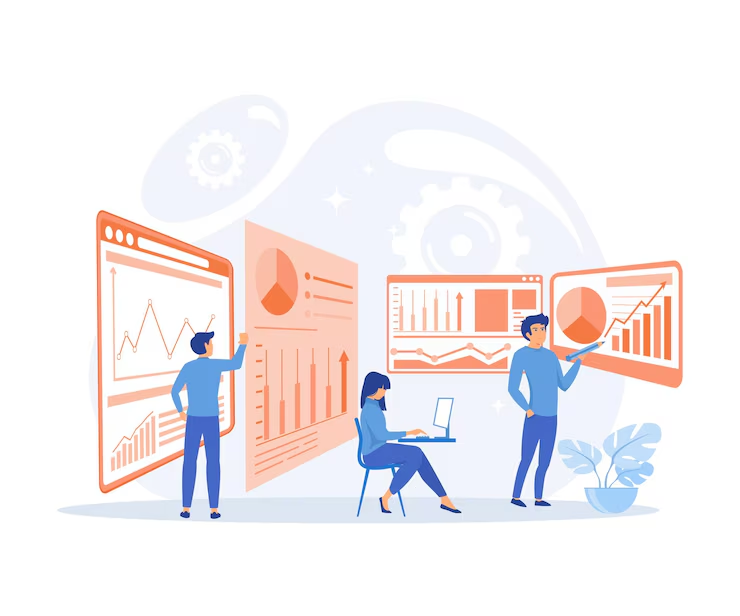
In an era where data drives decision-making, enhancing data accuracy and reporting is paramount for our success. We recognize that reliable data is the foundation upon which we build our strategies and make informed choices. By implementing robust data management systems, we can ensure that our information is accurate, up-to-date, and easily accessible.
This not only reduces the risk of errors but also instills confidence in our decision-making processes. Furthermore, advanced analytics tools allow us to generate insightful reports that provide a comprehensive view of our performance metrics. With these insights at our fingertips, we can identify trends, monitor key performance indicators, and make data-driven adjustments to our strategies.
The ability to visualize data through dashboards enhances our understanding of complex information, enabling us to communicate findings effectively across the organization. As we prioritize data accuracy and reporting, we empower ourselves to make strategic decisions that drive growth and success.
Improved Customer and Supplier Relationships
Building strong relationships with customers and suppliers is essential for sustaining long-term success in any business. We understand that fostering trust and collaboration with these stakeholders can lead to mutually beneficial outcomes. By prioritizing open communication and transparency, we create an environment where feedback is valued and acted upon.
This proactive approach not only strengthens our relationships but also enhances customer satisfaction and loyalty. Moreover, leveraging technology can significantly improve our interactions with customers and suppliers. Customer relationship management (CRM) systems enable us to track interactions, preferences, and purchase history, allowing us to tailor our offerings to meet their specific needs.
Similarly, by utilizing supply chain management tools, we can streamline procurement processes and ensure timely deliveries. As we enhance these relationships through effective communication and technology integration, we position ourselves as reliable partners in the eyes of our customers and suppliers.
Scalability and Flexibility
In a rapidly changing market landscape, scalability and flexibility are crucial attributes that we must cultivate within our organizations. As we grow, it is essential that our systems and processes can adapt to increased demand without compromising quality or efficiency. By investing in scalable solutions—such as cloud-based technologies—we can easily adjust our resources based on fluctuating needs.
This adaptability not only supports our growth ambitions but also ensures that we remain responsive to market changes. Flexibility also extends to our workforce. Embracing remote work options and flexible scheduling allows us to attract top talent from diverse backgrounds while accommodating varying employee needs.
This approach fosters a culture of inclusivity and innovation, as team members feel empowered to contribute their unique perspectives. By prioritizing scalability and flexibility, we position ourselves for sustainable growth while maintaining a competitive edge in the marketplace.
Cost Savings and Return on Investment

Cost savings are a primary concern for any organization striving for profitability. We recognize that by optimizing our operations and implementing efficient processes, we can significantly reduce unnecessary expenditures. For instance, automating routine tasks not only saves time but also minimizes labor costs associated with manual work.
Additionally, by leveraging technology to streamline supply chain management, we can negotiate better terms with suppliers and reduce inventory holding costs. The return on investment (ROI) from these initiatives is often substantial. As we enhance efficiency and reduce costs, we free up resources that can be reinvested into growth opportunities or innovation initiatives.
This cycle of continuous improvement not only strengthens our financial position but also enhances our ability to compete effectively in the market. By focusing on cost savings and maximizing ROI, we create a sustainable business model that supports long-term success.
Better Decision Making and Strategic Planning
Effective decision-making is at the heart of successful business management. We understand that the quality of our decisions directly impacts our organizational performance. By leveraging accurate data analytics and reporting tools, we can make informed choices based on real-time insights rather than relying on intuition alone.
This data-driven approach allows us to evaluate various scenarios, assess risks, and identify opportunities for growth. Strategic planning becomes more effective when grounded in reliable data. As we analyze market trends and customer behavior patterns, we can develop targeted strategies that align with our business objectives.
Furthermore, involving cross-functional teams in the planning process fosters diverse perspectives and encourages collaboration. This collective approach not only enhances the quality of our strategic plans but also ensures buy-in from all stakeholders involved.
Competitive Advantage in the Market
In an increasingly competitive landscape, establishing a competitive advantage is essential for long-term success. We recognize that by focusing on efficiency, streamlined processes, enhanced data accuracy, improved relationships, scalability, cost savings, better decision-making, and strategic planning, we position ourselves favorably against competitors. Our commitment to continuous improvement enables us to respond swiftly to market changes while delivering exceptional value to our customers.
Moreover, cultivating a culture of innovation within our organization allows us to stay ahead of industry trends. By encouraging creativity and experimentation among team members, we can develop unique solutions that differentiate us from competitors. As we leverage technology to enhance our offerings and improve customer experiences, we solidify our reputation as industry leaders.
Ultimately, by prioritizing these key areas, we not only gain a competitive edge but also ensure sustainable growth in an ever-evolving market landscape. In conclusion, as we navigate the complexities of modern business operations, it becomes evident that focusing on increased efficiency and productivity leads to numerous benefits across various dimensions of our organization. From streamlined processes to enhanced relationships with customers and suppliers, each aspect contributes to our overall success.
By embracing scalability, cost savings, better decision-making practices, and fostering a culture of innovation, we position ourselves as leaders in the market—ready to tackle challenges head-on while seizing opportunities for growth.
If you are looking to boost the ranking of your WooCommerce store, you may want to check out this article on Tips for Boosting the Ranking of WooCommerce Store. Customizing your ERP system can also be beneficial for your business, as discussed in the article “The Benefits of Customizing Your ERP System – Techno Softwares Can Tailor ERP to Your Business Needs.” Additionally, if you are interested in custom web application development services, you may find this article on Advantages of Custom Web Application Development Services helpful. Empower your business with custom web app development by experts by reading this article on Empower Your Business with Custom Web App Development by Experts.
FAQs
What is an ERP system?
An ERP (Enterprise Resource Planning) system is a software solution that integrates and manages all aspects of a business, including finance, human resources, supply chain, manufacturing, and customer relationship management.
What are the benefits of customizing an ERP system?
Customizing an ERP system allows businesses to tailor the software to their specific needs, processes, and workflows. This can lead to increased efficiency, improved productivity, better decision-making, and a competitive advantage in the market.
How can Techno Softwares tailor an ERP system to my business needs?
Techno Softwares has the expertise and experience to customize an ERP system to align with your unique business requirements. They can modify the software to fit your processes, integrate with existing systems, and provide ongoing support and maintenance.
What are some common customizations for an ERP system?
Common customizations for an ERP system include modifying user interfaces, adding new features or modules, integrating with third-party applications, automating specific tasks, and creating personalized reports and dashboards.
How can customizing an ERP system improve business operations?
Customizing an ERP system can improve business operations by streamlining processes, reducing manual work, providing real-time insights and analytics, enhancing collaboration, and adapting to changing business needs and industry trends.


