

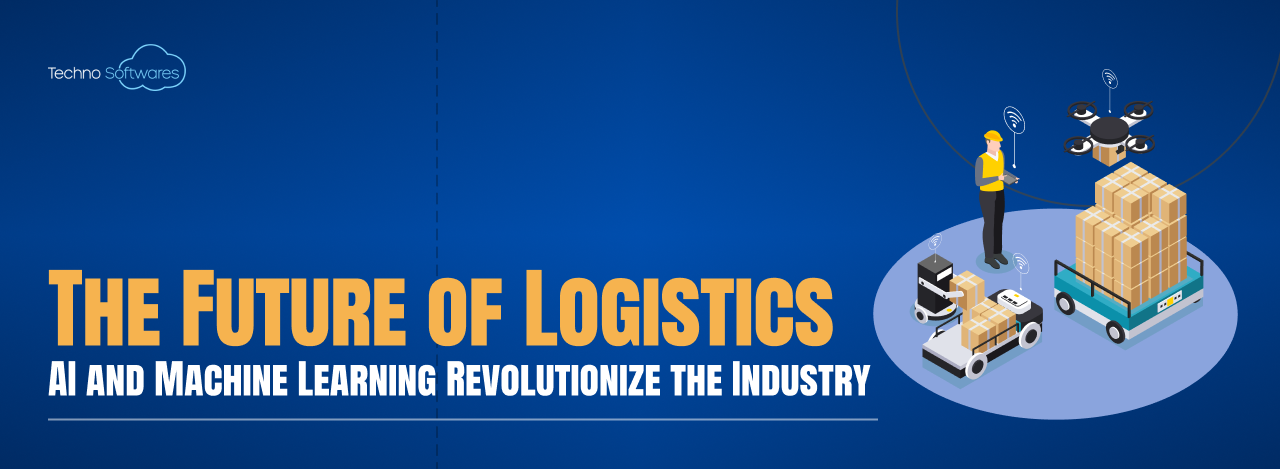
The Future of Logistics: How AI and Machine Learning Are Changing the Game
As we delve into the world of logistics, it becomes increasingly clear that artificial intelligence (AI) and machine learning (ML) are revolutionizing the industry. These technologies are not merely trends; they are reshaping how we manage supply chains, optimize routes, and enhance customer service. By harnessing vast amounts of data, AI and ML enable us to make informed decisions that were previously unimaginable.
The ability to analyze patterns and predict outcomes allows us to streamline operations, reduce costs, and improve overall efficiency. Moreover, the impact of AI and ML extends beyond mere operational improvements. These technologies are fostering a culture of innovation within logistics.
As we adopt AI-driven solutions, we find ourselves exploring new business models and strategies that can lead to competitive advantages. For instance, predictive analytics can help us anticipate demand fluctuations, allowing us to adjust our inventory levels proactively. This adaptability not only enhances our responsiveness to market changes but also strengthens our relationships with customers by ensuring that their needs are met promptly.
Key Takeaways
- AI and machine learning are revolutionizing logistics by optimizing routes, predicting demand, and automating processes.
- Improved efficiency in supply chain management is achieved through AI and machine learning by enhancing demand forecasting, inventory management, and transportation optimization.
- Techno softwares play a crucial role in leveraging AI and ML for logistics by providing advanced analytics, real-time visibility, and predictive insights.
- Implementing AI and machine learning in logistics operations leads to benefits such as cost reduction, faster delivery times, and enhanced customer satisfaction.
- Overcoming challenges in adopting AI and machine learning in logistics requires addressing data quality, integration issues, and workforce training.
How AI and Machine Learning are Improving Efficiency in Supply Chain Management
Optimizing Inventory Levels
By automating routine tasks, these technologies free up our workforce to focus on more strategic initiatives. For example, AI algorithms can analyze historical data to forecast demand accurately, enabling us to optimize inventory levels and reduce excess stock. This not only minimizes storage costs but also ensures that we have the right products available when our customers need them.
Enhancing Logistics Operations
Furthermore, AI and ML enhance our ability to monitor and manage logistics operations in real-time. With the integration of IoT devices, we can track shipments, monitor vehicle conditions, and assess delivery times with unprecedented precision.
Improving Service Levels and Customer Satisfaction
This level of visibility allows us to identify potential bottlenecks before they escalate into significant issues. By leveraging data-driven insights, we can make proactive adjustments to our logistics strategies, ultimately leading to improved service levels and customer satisfaction.
The Role of Techno Softwares in Leveraging AI and ML for Logistics
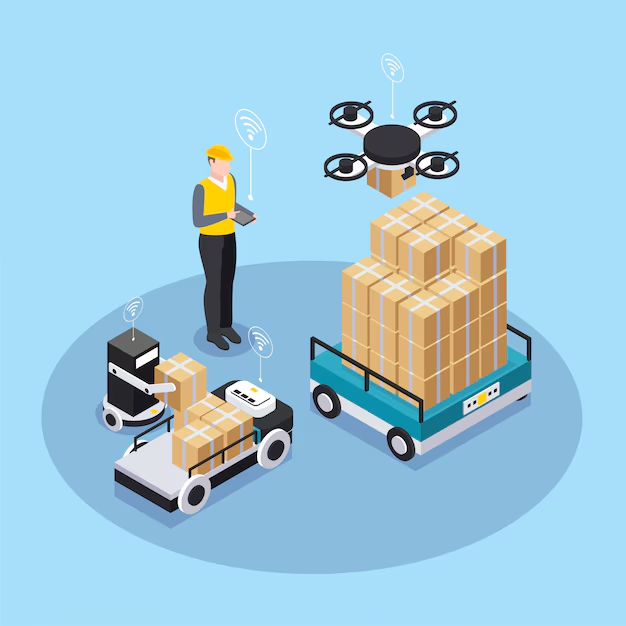
As we navigate the complexities of modern logistics, the role of specialized software solutions cannot be overstated. Techno Softwares are at the forefront of integrating AI and ML into logistics operations. These platforms provide us with the tools necessary to harness the power of data analytics, enabling us to make smarter decisions based on real-time information.
By utilizing advanced algorithms, we can optimize routing, manage inventory more effectively, and enhance overall operational efficiency. Moreover, Techno Softwares facilitate seamless communication across various stakeholders in the supply chain. With integrated systems that connect suppliers, manufacturers, and distributors, we can ensure that everyone is on the same page.
This transparency fosters collaboration and allows us to respond swiftly to changes in demand or supply disruptions. As we embrace these technological advancements, we position ourselves to thrive in an increasingly competitive landscape.
The Benefits of Implementing AI and Machine Learning in Logistics Operations
The benefits of implementing AI and ML in logistics operations are manifold. First and foremost, these technologies lead to significant cost savings. By optimizing routes and reducing fuel consumption through intelligent planning, we can lower transportation expenses while maintaining service quality.
Additionally, predictive maintenance powered by AI can help us avoid costly equipment failures by identifying potential issues before they arise. Beyond cost savings, AI and ML enhance our ability to deliver exceptional customer experiences. With personalized recommendations and faster response times driven by data insights, we can meet customer expectations more effectively.
This not only fosters loyalty but also positions us as leaders in our respective markets. As we continue to leverage these technologies, we unlock new opportunities for growth and innovation within our logistics operations.
Overcoming Challenges in Adopting AI and Machine Learning in Logistics
While the advantages of adopting AI and ML in logistics are clear, we must also acknowledge the challenges that come with this transition. One significant hurdle is the need for a cultural shift within our organizations. Embracing new technologies requires a willingness to adapt and learn.
We must invest in training our workforce to ensure they are equipped with the skills necessary to leverage these tools effectively. Additionally, data quality is a critical factor in the successful implementation of AI and ML solutions. Inaccurate or incomplete data can lead to misguided insights and poor decision-making.
Therefore, we must prioritize data governance and invest in robust data management practices. By addressing these challenges head-on, we can pave the way for a smoother transition into an AI-driven logistics landscape.
The Future of Logistics: Predictions and Trends with AI and Machine Learning
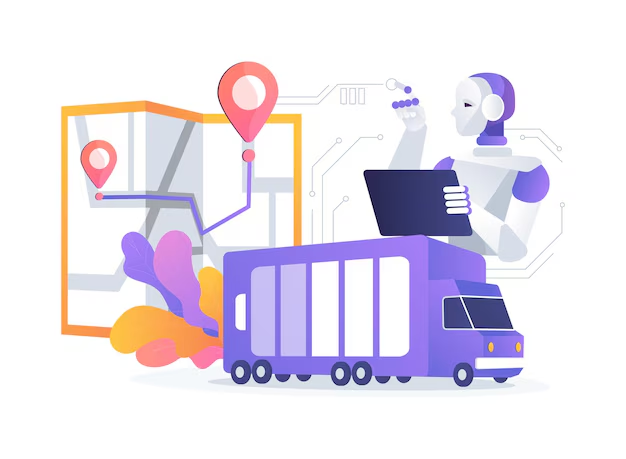
Looking ahead, the future of logistics is undoubtedly intertwined with advancements in AI and ML. We anticipate a continued evolution of autonomous vehicles and drones for last-mile delivery, which will further enhance efficiency and reduce costs. As these technologies mature, we will likely see a shift towards fully automated supply chains where human intervention is minimized.
Moreover, the integration of blockchain technology with AI will revolutionize transparency in logistics. By providing an immutable record of transactions, blockchain can enhance trust among stakeholders while enabling real-time tracking of goods throughout the supply chain. As we embrace these trends, we position ourselves at the forefront of innovation in logistics, ready to adapt to the ever-changing landscape.
Case Studies: Successful Implementation of AI and Machine Learning in Logistics
To illustrate the transformative power of AI and ML in logistics, we can look at several case studies that highlight successful implementations. One notable example is a global e-commerce giant that utilized machine learning algorithms to optimize its warehousing operations. By analyzing historical order data, the company was able to predict demand patterns accurately, leading to improved inventory management and reduced fulfillment times.
Another compelling case involves a major shipping company that adopted AI-driven route optimization software. By leveraging real-time traffic data and weather forecasts, they were able to minimize delays and enhance delivery efficiency significantly. These case studies serve as powerful reminders of how embracing AI and ML can lead to tangible improvements in logistics operations.
How Techno Softwares Can Help Your Business Embrace AI and Machine Learning for Logistics Success
As we consider the future of logistics, it becomes evident that partnering with Techno Softwares can be a game-changer for our businesses. These specialized solutions provide us with the necessary infrastructure to implement AI and ML effectively. From predictive analytics tools to automated inventory management systems, Techno Softwares offer a comprehensive suite of solutions tailored to our unique needs.
By collaborating with Techno Softwares, we gain access to expertise that can guide us through the complexities of digital transformation. Their support enables us to harness the full potential of AI and ML while minimizing risks associated with implementation. As we embark on this journey towards logistics success, leveraging these advanced technologies will undoubtedly position us for sustained growth and competitiveness in an increasingly dynamic market landscape.
If you are interested in learning more about custom web application development services, you should check out this article on Techno Softwares’ blog. It provides valuable insights into how businesses can leverage custom web applications to enhance their operations. Additionally, if you want to explore how AI is reshaping the job market, be sure to read this informative piece on the same blog. Lastly, if you are interested in API integration with platforms like Wix, you can find useful information in this article. Techno Softwares offers a range of services to help businesses stay ahead in the rapidly evolving technological landscape.
FAQs
What is the future of logistics?
The future of logistics is being shaped by advancements in technology, particularly AI and machine learning. These technologies are revolutionizing the way companies manage their supply chains, optimize routes, and forecast demand.
How are AI and machine learning changing the game in logistics?
AI and machine learning are enabling logistics companies to automate processes, make data-driven decisions, and improve efficiency. These technologies can analyze large volumes of data to identify patterns, predict demand, and optimize routes in real-time.
How can Techno Softwares help leverage AI and ML in logistics?
Techno Softwares offers AI and machine learning solutions that can be tailored to the specific needs of logistics companies. Their expertise in developing custom software and integrating AI and ML technologies can help companies streamline their operations and gain a competitive edge in the industry.


