
The Importance of Legacy System Migration for Business Growth: Techno Softwares Explains
In the realm of technology, legacy systems refer to outdated computing systems, software applications, or hardware that continue to be in use, despite the availability of newer alternatives. These systems often serve critical functions within organizations, housing essential data and processes that have been built up over many years. As we delve into the intricacies of legacy systems, we recognize that they are not merely old technology; they represent a significant investment in time, resources, and knowledge.
Many organizations rely on these systems for their day-to-day operations, making them a double-edged sword—while they provide stability and continuity, they also pose significant risks and limitations. Legacy systems often become a hindrance to innovation and agility. As technology evolves at an unprecedented pace, these outdated systems can struggle to integrate with modern applications and platforms.
This disconnect can lead to inefficiencies, increased operational costs, and a lack of responsiveness to market changes. Furthermore, the knowledge required to maintain these systems is often confined to a dwindling pool of employees who may soon retire or leave the organization. Thus, understanding legacy systems is crucial for any organization aiming to navigate the complexities of modern technology landscapes while ensuring that they do not become shackled by their own history.
Key Takeaways
- Legacy systems refer to outdated technology or software that may be difficult to maintain or integrate with modern systems
- Challenges of legacy system migration include data migration, system downtime, and potential loss of functionality
- Benefits of legacy system migration include improved efficiency, reduced maintenance costs, and enhanced security
- Legacy system migration can have a positive impact on business growth by enabling scalability and innovation
- Considerations for legacy system migration include thorough planning, stakeholder buy-in, and risk management strategies
Challenges of Legacy System Migration
Unraveling Complexity
One of the primary hurdles of legacy system migration is the intricacy of these systems. Many legacy applications are deeply intertwined with other processes and databases, creating a web of dependencies that can be difficult to untangle. As a result, we must carefully map out these connections to avoid disrupting critical business functions, which can lead to extended timelines and increased costs.
Data Integrity and Accuracy
Another significant challenge is the potential for data loss or corruption during migration. Legacy systems may store data in outdated formats or structures that are incompatible with modern systems. To ensure the integrity and accuracy of the data, we must implement rigorous validation processes during the transfer.
Change Management and Adoption
Resistance from employees who are accustomed to the old systems and may be hesitant to adopt new technologies is a common obstacle. Change management becomes a vital component of our migration strategy, as we need to foster a culture of adaptability and provide adequate training to ease the transition.
Benefits of Legacy System Migration
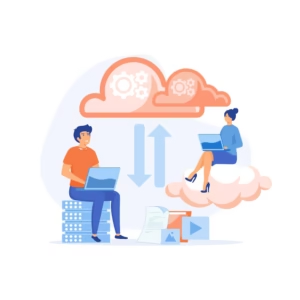
Despite the challenges associated with migrating legacy systems, the benefits can be substantial and transformative for organizations. One of the most significant advantages is improved efficiency. Modern systems are designed with advanced features and capabilities that streamline processes and enhance productivity.
By migrating to newer technologies, we can automate repetitive tasks, reduce manual errors, and ultimately free up valuable resources for more strategic initiatives. This shift not only improves operational efficiency but also allows us to respond more swiftly to market demands. Moreover, migrating from legacy systems opens the door to enhanced data analytics and insights.
Modern platforms often come equipped with powerful analytical tools that enable us to harness data in ways that were previously impossible. By leveraging real-time data analytics, we can make informed decisions based on current trends and customer behaviors, driving better business outcomes. Additionally, newer systems typically offer improved security features that protect sensitive information from cyber threats—an increasingly critical concern in today’s digital landscape.
Impact on Business Growth
| Metrics | Impact on Business Growth |
|---|---|
| Revenue | Increase in revenue due to expanded customer base and improved products/services |
| Profit Margin | Higher profit margin as a result of increased efficiency and cost savings |
| Market Share | Expansion of market share through successful marketing and sales strategies |
| Customer Satisfaction | Improved customer satisfaction leading to repeat business and positive word-of-mouth |
| Employee Productivity | Increased productivity and innovation from motivated and engaged employees |
The impact of legacy system migration on business growth cannot be overstated. As we transition to modern technologies, we position ourselves to capitalize on new opportunities and drive innovation within our organizations. With enhanced operational efficiency and improved data analytics capabilities, we can develop new products and services that meet evolving customer needs.
This agility allows us to stay competitive in an ever-changing marketplace, fostering growth and expansion. Furthermore, migrating from legacy systems can significantly improve customer experiences. Modern technologies often provide more user-friendly interfaces and faster response times, which can enhance customer satisfaction and loyalty.
As we embrace digital transformation through migration, we also create opportunities for better engagement with our customers across various channels. This holistic approach not only strengthens our brand but also drives revenue growth as we attract new customers while retaining existing ones.
Considerations for Legacy System Migration
As we embark on the journey of legacy system migration, several key considerations must guide our strategy. First and foremost, we need a comprehensive assessment of our current systems and processes. This evaluation should include an inventory of all applications, their functionalities, and their interdependencies.
By understanding the full scope of our legacy environment, we can develop a tailored migration plan that addresses specific needs and challenges. Additionally, stakeholder engagement is crucial throughout the migration process. We must involve key stakeholders from various departments to gather insights and ensure alignment with organizational goals.
Their input can help us identify potential roadblocks and develop strategies to mitigate risks effectively. Furthermore, establishing clear communication channels will facilitate transparency and foster a sense of ownership among employees as they adapt to new technologies.
Techno Softwares’ Approach to Legacy System Migration
Understanding the Unique Needs of Each Organization
At Techno Softwares, we acknowledge that every organization’s journey to modernize its technology landscape is distinct. Our approach to legacy system migration is built on collaboration and customization. We initiate the process by conducting a thorough assessment of our clients’ existing systems, pinpointing areas of difficulty and opportunities for improvement.
Developing a Tailored Migration Strategy
This foundational understanding enables us to create a migration strategy that aligns with our clients’ specific business objectives. Our team employs a phased migration approach that minimizes disruption while maximizing efficiency. By breaking down the migration process into manageable stages, we ensure that critical functions remain operational throughout the transition.
Ensuring Data Integrity and Seamless Transition
Additionally, we prioritize data integrity by implementing robust validation protocols during data transfer. This ensures that all data is accurately and securely transferred to the new system. Our commitment to change management means that we provide comprehensive training and support for employees at every stage of the migration process, empowering them to confidently adapt to new technologies.
Empowering Employees Through Change Management
By providing thorough training and support, we enable employees to navigate the transition smoothly and effectively. This not only ensures a seamless migration process but also equips employees with the skills and knowledge needed to maximize the benefits of the new system.
Case Studies of Successful Legacy System Migrations
To illustrate the effectiveness of our approach at Techno Softwares, we can look at several case studies showcasing successful legacy system migrations. In one instance, a large retail organization faced significant challenges due to an outdated inventory management system that hindered their ability to respond to market demands swiftly. By partnering with us, they undertook a comprehensive assessment of their existing processes and implemented a modern inventory management solution tailored to their needs.
The result was a 30% reduction in inventory holding costs and a marked improvement in order fulfillment times. Another case study involved a financial services firm struggling with compliance issues due to their reliance on legacy software for transaction processing. Our team worked closely with them to migrate their operations to a cloud-based platform equipped with advanced compliance features.
This transition not only streamlined their processes but also enhanced their ability to meet regulatory requirements efficiently. As a result, they experienced a significant reduction in compliance-related penalties and improved customer trust.
Future Trends in Legacy System Migration
As we look ahead, several trends are shaping the future of legacy system migration. One notable trend is the increasing adoption of cloud technologies. Organizations are recognizing the benefits of cloud-based solutions for scalability, flexibility, and cost-effectiveness.
As more businesses migrate their legacy systems to the cloud, we anticipate a shift toward hybrid environments where both legacy and modern systems coexist temporarily during transitions. Another emerging trend is the integration of artificial intelligence (AI) and machine learning (ML) into migration strategies. These technologies can enhance data analysis during migrations, identifying patterns and anomalies that may not be apparent through traditional methods.
By leveraging AI and ML capabilities, organizations can make more informed decisions about which systems to prioritize for migration and how best to optimize their new environments. In conclusion, understanding legacy systems is essential as we navigate the complexities of technology migration. While challenges abound, the benefits of modernizing our systems far outweigh the risks involved.
By embracing change thoughtfully and strategically, we position ourselves for sustained growth and success in an increasingly digital world. At Techno Softwares, we remain committed to guiding organizations through this transformative journey with expertise and innovation at every step.
For businesses considering legacy system migration, understanding the broader landscape of technological upgrades is crucial. An insightful related read is the article on Mastering Microservices: Building Scalable and Resilient Applications. This piece delves into how microservices architecture plays a pivotal role in enhancing system scalability and resilience, aspects that are often limited in legacy systems. By migrating to a microservices-based framework, businesses can achieve more modular and flexible systems, which is essential for growth and adapting to changing market demands. This article is a valuable resource for those looking to deepen their understanding of how microservices can complement their migration strategy.
FAQs
What is a legacy system?
A legacy system refers to outdated software or hardware that is still in use within an organization. These systems are often difficult and costly to maintain and may not be compatible with modern technologies.
Why is legacy system migration important for business growth?
Legacy system migration is important for business growth because it allows organizations to modernize their technology infrastructure, improve efficiency, and reduce operational costs. It also enables businesses to take advantage of new opportunities and stay competitive in the market.
What are the challenges of legacy system migration?
Challenges of legacy system migration include data migration, system integration, potential downtime, and the need for retraining staff. Additionally, there may be compatibility issues with new technologies and the risk of data loss during the migration process.
How can a company benefit from legacy system migration?
Companies can benefit from legacy system migration by improving operational efficiency, reducing maintenance costs, enhancing security, and gaining access to new features and capabilities. It also allows for better integration with modern technologies and the ability to adapt to changing business needs.
What are the key considerations for legacy system migration?
Key considerations for legacy system migration include assessing the current system, identifying business requirements, evaluating potential risks, developing a migration plan, and ensuring proper testing and training. It is also important to consider the long-term impact on the organization’s operations and future scalability.


