

The Role of AI and Automation in Quick Commerce Development by Techno Softwares
In recent years, the retail landscape has undergone a seismic shift, giving rise to the phenomenon known as quick commerce. This innovative approach to e-commerce emphasizes speed and convenience, allowing consumers to receive their orders in a matter of minutes rather than days. As we navigate our busy lives, the demand for instant gratification has surged, prompting businesses to adapt and evolve.
Quick commerce is not merely a trend; it represents a fundamental change in how we shop and interact with brands. By leveraging technology and optimizing logistics, companies are now able to deliver products to our doorsteps faster than ever before. As we delve deeper into the world of quick commerce, we find that it encompasses a wide range of products, from groceries to electronics.
The rise of mobile applications and on-demand delivery services has made it easier for us to access what we need at any given moment. This shift has not only transformed consumer behavior but has also created new opportunities for businesses to engage with their customers in real-time. The integration of artificial intelligence (AI) and automation into this space is revolutionizing the way we think about inventory management, order fulfillment, and personalized shopping experiences.
As we explore these advancements, we will uncover how they are shaping the future of quick commerce.
Key Takeaways
- Quick Commerce is revolutionizing the retail industry by providing ultra-fast delivery of goods and services to consumers.
- AI and automation are significantly impacting Quick Commerce by optimizing inventory management and streamlining order fulfillment processes.
- AI plays a crucial role in optimizing inventory management by predicting demand, reducing stockouts, and minimizing overstock situations.
- Automation is streamlining order fulfillment processes by automating tasks such as picking, packing, and shipping, leading to faster and more efficient operations.
- AI-powered personalization in Quick Commerce is enhancing the customer experience by providing personalized recommendations and targeted promotions based on individual preferences and behavior.
The Impact of AI and Automation on Quick Commerce
The integration of AI and automation into quick commerce has been nothing short of transformative. These technologies have enabled businesses to streamline their operations, enhance customer experiences, and ultimately drive growth. By harnessing the power of AI, companies can analyze vast amounts of data to gain insights into consumer behavior, preferences, and trends.
This data-driven approach allows businesses to make informed decisions that cater to our needs and expectations, ensuring that we receive the products we want when we want them. Moreover, automation plays a crucial role in optimizing various aspects of quick commerce. From inventory management to order processing, automated systems can significantly reduce human error and increase efficiency.
For instance, automated warehouses equipped with robotics can pick and pack items at lightning speed, ensuring that our orders are fulfilled promptly. As we witness the convergence of AI and automation in this sector, it becomes clear that these technologies are not just enhancing operational efficiency; they are also redefining our shopping experiences by making them faster and more convenient.
The Role of AI in Optimizing Inventory Management
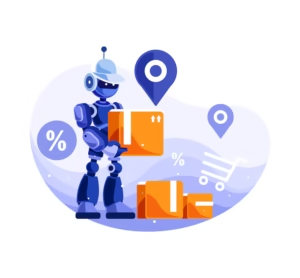
One of the most significant challenges in quick commerce is managing inventory effectively. With consumer demand fluctuating rapidly, businesses must ensure that they have the right products available at the right time. This is where AI comes into play.
By utilizing machine learning algorithms, companies can predict demand patterns based on historical data, seasonal trends, and even real-time market conditions. This predictive capability allows businesses to optimize their inventory levels, reducing the risk of stockouts or overstock situations. Furthermore, AI can enhance inventory management by automating replenishment processes.
When stock levels fall below a certain threshold, AI systems can trigger automatic orders to suppliers, ensuring that we always have access to the products we need. This not only improves efficiency but also minimizes waste and reduces costs associated with excess inventory. As we embrace these AI-driven solutions, we can expect a more seamless shopping experience where our favorite products are consistently available at our fingertips.
Automation in Streamlining Order Fulfillment Processes
Order fulfillment is a critical component of quick commerce, and automation is revolutionizing how this process is executed. Traditionally, order fulfillment involved numerous manual steps that could lead to delays and errors. However, with the advent of automated systems, businesses can now streamline their fulfillment processes significantly.
Automated picking systems use advanced robotics to locate and retrieve items from warehouses quickly, while conveyor belts transport products efficiently to packing stations. Additionally, automation extends beyond the warehouse. Once an order is placed, automated systems can manage shipping logistics by selecting the most efficient delivery routes and methods.
This not only speeds up delivery times but also reduces operational costs. As we experience the benefits of these automated fulfillment processes, it becomes evident that they are essential for meeting our expectations for speed and reliability in quick commerce.
AI-Powered Personalization in Quick Commerce
In an era where personalization is paramount, AI is playing a pivotal role in enhancing our shopping experiences within quick commerce. By analyzing our browsing history, purchase patterns, and preferences, AI algorithms can curate personalized product recommendations tailored specifically to us. This level of customization not only makes our shopping journeys more enjoyable but also increases the likelihood of conversion for businesses.
Moreover, AI-powered chatbots and virtual assistants are becoming increasingly prevalent in quick commerce platforms. These intelligent systems can engage with us in real-time, answering questions, providing product information, and even assisting with order placements. By offering personalized support and recommendations, businesses can foster stronger relationships with us as customers, ultimately driving loyalty and repeat purchases.
As we continue to embrace these personalized experiences, it is clear that AI is reshaping the way we interact with brands in the quick commerce space.
The Use of AI and Automation in Predictive Analytics for Quick Commerce

Predictive analytics is another area where AI and automation are making significant strides in quick commerce. By leveraging historical data and advanced algorithms, businesses can forecast future trends and consumer behavior with remarkable accuracy. This capability allows companies to anticipate our needs before we even express them, ensuring that they are well-prepared to meet demand.
For instance, predictive analytics can help businesses identify emerging trends in product popularity or seasonal fluctuations in demand. Armed with this information, companies can adjust their inventory levels accordingly and implement targeted marketing strategies that resonate with us as consumers. Additionally, predictive analytics can enhance supply chain management by optimizing procurement processes and reducing lead times.
As we witness the power of predictive analytics in action, it becomes evident that these tools are essential for staying ahead in the competitive landscape of quick commerce.
Challenges and Opportunities in Implementing AI and Automation in Quick Commerce
While the integration of AI and automation into quick commerce presents numerous opportunities for growth and efficiency, it also comes with its fair share of challenges. One significant hurdle is the initial investment required to implement these technologies effectively. For many businesses, especially smaller ones, the cost of acquiring advanced AI systems or automating fulfillment processes can be prohibitive.
Moreover, there is a learning curve associated with adopting new technologies. Employees may require training to adapt to automated systems or understand how to leverage AI tools effectively. Resistance to change can also pose a challenge as organizations navigate the transition from traditional methods to more innovative approaches.
However, despite these challenges, the potential rewards far outweigh the obstacles. By embracing AI and automation, businesses can position themselves for long-term success in an increasingly competitive market.
The Future of Quick Commerce with AI and Automation
As we look ahead to the future of quick commerce, it is clear that AI and automation will continue to play a central role in shaping this dynamic landscape. The ongoing advancements in technology will enable businesses to further refine their operations, enhance customer experiences, and drive innovation. We can expect to see even more sophisticated AI algorithms capable of predicting our needs with greater accuracy while automation continues to streamline processes across the board.
Moreover, as consumer expectations evolve, businesses will need to adapt quickly to stay relevant. The integration of AI-powered personalization will become even more critical as we seek tailored experiences that resonate with our individual preferences. Additionally, as sustainability becomes a growing concern for consumers, companies will likely leverage AI and automation to optimize their supply chains and reduce waste.
In conclusion, quick commerce represents a significant evolution in retail driven by the power of AI and automation. As we embrace these technologies, we can look forward to a future where shopping is not only faster but also more personalized and efficient than ever before. The journey ahead promises exciting possibilities for both consumers and businesses alike as we navigate this rapidly changing landscape together.
In exploring the impact of AI and automation on quick commerce, it’s also crucial to understand the broader context of software development and management practices that support these technologies. A related article by Techno Softwares, titled What Are the Best Practices for Managing Remote Development Teams?, delves into effective strategies for overseeing teams that are often integral in developing AI and automation solutions. This piece provides valuable insights into maintaining productivity and innovation, which are essential for companies looking to leverage technology for rapid commerce solutions.
FAQs
What is quick commerce?
Quick commerce refers to the trend of delivering goods to customers in the shortest possible time, often within an hour of ordering. It involves the use of advanced technology and logistics to fulfill orders quickly and efficiently.
What is the role of AI in quick commerce development?
AI plays a crucial role in quick commerce development by enabling businesses to optimize their operations, predict customer demand, and automate various processes such as order fulfillment, inventory management, and delivery route optimization.
How does automation contribute to quick commerce development?
Automation streamlines various aspects of quick commerce, such as order processing, inventory management, and delivery logistics. It helps businesses fulfill orders faster and more accurately, leading to improved customer satisfaction and operational efficiency.
What are the benefits of AI and automation in quick commerce?
The use of AI and automation in quick commerce leads to faster order fulfillment, reduced operational costs, improved accuracy, and enhanced customer experiences. It also enables businesses to scale their operations more effectively and adapt to changing market demands.


