

Transforming Retail Customer Relationships with CRM: A Techno Softwares Case Study
In the rapidly evolving landscape of technology, the role of software solutions has become increasingly pivotal in shaping business operations. Among these solutions, Customer Relationship Management (CRM) software stands out as a cornerstone for organizations aiming to enhance their interactions with customers. Techno Softwares, a leader in this domain, has developed innovative CRM systems that empower businesses to manage customer relationships more effectively.
By integrating various functionalities, such as sales tracking, customer service management, and marketing automation, Techno Softwares provides a comprehensive platform that caters to the diverse needs of modern enterprises. As we delve deeper into the significance of CRM in the retail industry, it becomes evident that these systems are not merely tools for managing customer data; they are strategic assets that can drive growth and improve customer satisfaction. The retail sector, characterized by its dynamic nature and fierce competition, requires businesses to adopt a customer-centric approach.
With Techno Softwares’ CRM solutions, retailers can harness the power of data to create meaningful connections with their customers, ultimately leading to increased sales and brand loyalty.
Key Takeaways
- Techno Softwares is a leading provider of CRM solutions for businesses.
- Implementing CRM in the retail industry can help businesses better understand and serve their customers.
- CRM can improve customer engagement by providing personalized interactions and targeted marketing.
- Personalizing customer experiences through CRM can lead to increased customer satisfaction and loyalty.
- Streamlining sales and marketing efforts with CRM can lead to more efficient and effective business operations.
Implementing CRM in Retail Industry
The implementation of CRM systems in the retail industry is a transformative process that can redefine how businesses interact with their customers. To begin with, we must recognize that successful implementation requires a clear understanding of the specific needs and challenges faced by retailers. By conducting thorough assessments and gathering input from various stakeholders, we can tailor the CRM system to align with the unique operational workflows of the retail environment.
This collaborative approach ensures that the technology is not only adopted but embraced by all team members. Moreover, training and support play a crucial role in the successful integration of CRM systems. As we introduce new software into our retail operations, it is essential to equip our staff with the necessary skills and knowledge to utilize the system effectively.
This involves comprehensive training sessions that cover everything from basic functionalities to advanced features. By fostering a culture of continuous learning and adaptation, we can maximize the benefits of our CRM investment and ensure that our teams are empowered to leverage the technology to its fullest potential.
Improving Customer Engagement with CRM
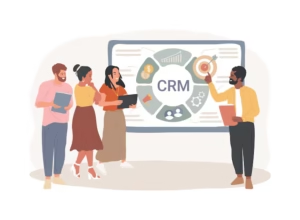
One of the most significant advantages of implementing a CRM system is its ability to enhance customer engagement. By centralizing customer data, we gain valuable insights into purchasing behaviors, preferences, and interactions. This wealth of information allows us to tailor our communication strategies and marketing efforts to resonate with our target audience.
For instance, we can segment our customer base and create personalized campaigns that speak directly to their interests, thereby increasing the likelihood of engagement and conversion. Furthermore, CRM systems enable us to track customer interactions across multiple channels, including social media, email, and in-store visits. This omnichannel approach ensures that we maintain a consistent brand voice and message, regardless of how customers choose to engage with us.
By analyzing these interactions, we can identify trends and patterns that inform our future strategies. Ultimately, improved customer engagement leads to stronger relationships and increased brand loyalty, positioning us for long-term success in the competitive retail landscape.
Personalizing Customer Experiences
In today’s retail environment, personalization has become a key differentiator for brands seeking to stand out in a crowded marketplace. With the help of CRM systems, we can create highly personalized experiences for our customers at every touchpoint. By leveraging data analytics, we can gain insights into individual preferences and behaviors, allowing us to tailor product recommendations, promotions, and communications accordingly.
This level of personalization not only enhances the customer experience but also fosters a sense of connection between the brand and its audience. Moreover, personalized experiences extend beyond marketing efforts; they also encompass customer service interactions. When we utilize CRM systems effectively, we can access comprehensive customer profiles that include purchase history and previous interactions.
This information equips our customer service representatives with the context they need to provide tailored support. By addressing customers by name and understanding their unique needs, we can create memorable experiences that encourage repeat business and positive word-of-mouth referrals.
Streamlining Sales and Marketing Efforts
The integration of CRM systems into our sales and marketing efforts can lead to significant improvements in efficiency and effectiveness. By automating routine tasks such as lead tracking and follow-up communications, we free up valuable time for our sales teams to focus on building relationships and closing deals. Additionally, CRM systems provide us with tools for managing marketing campaigns more effectively.
We can track campaign performance in real-time, allowing us to make data-driven adjustments that optimize results. Furthermore, CRM systems facilitate collaboration between sales and marketing teams by providing a shared platform for communication and information sharing. This alignment ensures that both departments are working towards common goals and have access to the same data insights.
As a result, we can create cohesive strategies that drive customer acquisition and retention while maximizing return on investment. The streamlined processes enabled by CRM technology ultimately contribute to a more agile and responsive retail operation.
Enhancing Customer Loyalty and Retention

Customer loyalty is a critical component of long-term success in the retail industry. With the help of CRM systems, we can implement targeted loyalty programs that reward repeat customers and encourage ongoing engagement. By analyzing customer data, we can identify our most loyal patrons and tailor rewards that resonate with their preferences.
Whether through exclusive discounts or personalized offers, these initiatives foster a sense of appreciation among customers and incentivize them to continue shopping with us. Moreover, CRM systems enable us to proactively address customer concerns before they escalate into issues that could jeopardize loyalty. By monitoring feedback and engagement metrics, we can identify potential pain points in the customer journey and take corrective action promptly.
This proactive approach not only enhances customer satisfaction but also demonstrates our commitment to their needs. As we cultivate strong relationships built on trust and responsiveness, we position ourselves as a brand that values its customers—an essential factor in driving loyalty and retention.
Leveraging Data Analytics for Better Insights
In an era where data is often referred to as the new oil, leveraging analytics through CRM systems has become indispensable for retailers seeking a competitive edge. By harnessing the power of data analytics, we can gain deeper insights into customer behavior, market trends, and operational performance. This information empowers us to make informed decisions that drive growth and innovation within our organizations.
For instance, predictive analytics allows us to anticipate future purchasing behaviors based on historical data. By understanding which products are likely to be popular during specific seasons or events, we can optimize inventory management and marketing strategies accordingly. Additionally, data analytics enables us to measure the effectiveness of our campaigns in real-time, allowing for agile adjustments that maximize impact.
As we embrace data-driven decision-making, we position ourselves as forward-thinking retailers capable of adapting to changing market dynamics.
The Future of CRM in Retail Industry
As we look ahead to the future of CRM in the retail industry, it is clear that these systems will continue to evolve alongside technological advancements. The integration of artificial intelligence (AI) and machine learning into CRM platforms promises to further enhance personalization and automation capabilities. By harnessing these technologies, we can create even more sophisticated customer experiences that anticipate needs before they arise.
Moreover, as consumer expectations continue to shift towards greater transparency and ethical practices, CRM systems will play a vital role in helping retailers build trust with their customers. By utilizing data responsibly and prioritizing customer privacy, we can foster relationships grounded in mutual respect. In this ever-changing landscape, embracing innovation while remaining committed to customer-centric values will be essential for retailers seeking sustained success in the years to come.
In conclusion, Techno Softwares’ CRM solutions offer a pathway for retailers to navigate the complexities of modern consumer behavior while enhancing engagement, loyalty, and operational efficiency. As we continue to explore the potential of CRM technology, we are excited about the opportunities it presents for shaping the future of retail—one where meaningful connections with customers drive lasting success.
In exploring the transformative impact of CRM systems on retail customer relationships, as discussed in the Techno Softwares case study, it’s also beneficial to consider the underlying technologies that enable these systems. A related article that delves into one such technology is “Cloud Computing,” which can be found on Techno Softwares’ blog. Cloud computing provides the infrastructure and scalability that CRM systems require to efficiently manage and analyze large volumes of customer data, thereby enhancing customer relationship management. For a deeper understanding of how cloud computing supports CRM systems in retail, you can read more at Cloud Computing at Techno Softwares. This article provides valuable insights into how cloud technology can be leveraged to improve business operations and customer interactions in the retail sector.
FAQs
What is CRM?
CRM stands for Customer Relationship Management. It is a technology and strategy used by companies to manage and analyze customer interactions and data throughout the customer lifecycle, with the goal of improving customer relationships, retention, and sales growth.
How can CRM transform retail customer relationships?
CRM can transform retail customer relationships by providing a centralized platform for managing customer data, interactions, and communication. This allows retailers to personalize their marketing efforts, provide better customer service, and ultimately build stronger, more loyal customer relationships.
What are the benefits of using CRM in retail?
Some benefits of using CRM in retail include improved customer satisfaction, increased customer retention, more targeted marketing efforts, better understanding of customer needs and preferences, and streamlined sales processes.
How did Techno Softwares use CRM to transform retail customer relationships?
Techno Softwares used CRM to centralize customer data, track customer interactions, and personalize marketing efforts. This allowed them to better understand their customers, provide more targeted and effective marketing campaigns, and ultimately improve customer relationships and sales.
What are some key features of CRM for retail businesses?
Key features of CRM for retail businesses include customer data management, sales and marketing automation, customer communication tools, reporting and analytics, and integration with other business systems such as inventory management and e-commerce platforms.


