

How to Leverage SEO to Drive More Organic Traffic to Your Site
In the digital landscape, Search Engine Optimization (SEO) serves as a cornerstone for online visibility and success. As we delve into the intricacies of SEO, we recognize that it encompasses a variety of strategies and techniques aimed at enhancing a website’s ranking on search engine results pages (SERPs). The primary goal of SEO is to attract organic traffic, which is crucial for businesses and content creators alike.
By understanding how search engines operate, we can better position ourselves to meet the needs of our target audience and improve our online presence. At its core, SEO revolves around the algorithms that search engines like Google use to determine the relevance and authority of web pages. These algorithms consider numerous factors, including keyword relevance, site structure, user experience, and content quality.
As we familiarize ourselves with these elements, we can begin to implement effective strategies that align with search engine guidelines. This foundational knowledge empowers us to make informed decisions about our online content and marketing efforts, ultimately leading to improved visibility and engagement.
Key Takeaways
- Understanding the basics of SEO is crucial for improving website visibility and ranking on search engines.
- Conducting keyword research helps in identifying relevant and high-traffic keywords to target in SEO strategies.
- Optimizing on-page elements such as title tags, meta descriptions, and headers is essential for improving website relevance and visibility.
- Creating high-quality and relevant content is key to engaging users and improving search engine rankings.
- Building quality backlinks from authoritative and relevant websites is important for improving website authority and search engine rankings.
Conducting Keyword Research
Uncovering High-Volume Keywords with Low Competition
We utilize various tools and resources to uncover high-volume keywords with low competition, enabling us to carve out a space in the crowded digital marketplace.
Understanding User Intent
Keyword research is not just about finding popular terms; it also involves understanding user intent. We must consider whether users are looking for information, products, or services when they type in a particular query. By categorizing keywords into informational, navigational, and transactional types, we can create targeted content that resonates with our audience’s needs.
Enhancing Search Rankings and Fostering Meaningful Connections
This strategic approach not only enhances our chances of ranking higher in search results but also fosters a more meaningful connection with our visitors.
Optimizing On-Page Elements

Once we have identified our target keywords, the next step is optimizing on-page elements to ensure that our content is both user-friendly and search engine-friendly. On-page SEO involves various components, including title tags, meta descriptions, header tags, and image alt text. By incorporating our chosen keywords into these elements, we signal to search engines what our content is about while also improving the overall user experience.
In addition to keyword placement, we must also focus on creating a logical site structure that enhances navigation. A well-organized website not only helps search engines crawl our pages more effectively but also makes it easier for users to find the information they seek. We can achieve this by using clear headings, internal linking strategies, and a responsive design that adapts to different devices.
By prioritizing both SEO best practices and user experience, we can create a website that stands out in search results and keeps visitors engaged.
Creating High-Quality Content
Content is often referred to as king in the realm of SEO, and for good reason. High-quality content not only attracts visitors but also encourages them to stay longer on our site and engage with our offerings. As we create content, we must prioritize originality, relevance, and value.
This means providing insights, solutions, or entertainment that addresses the needs of our audience while incorporating our target keywords naturally. Furthermore, we should consider various content formats to appeal to different preferences. From blog posts and articles to videos and infographics, diverse content types can enhance user engagement and shareability.
By regularly updating our content and ensuring it remains relevant over time, we can establish ourselves as authoritative figures in our niche. This commitment to quality not only boosts our SEO efforts but also fosters trust and loyalty among our audience.
Building Quality Backlinks
Backlinks play a crucial role in establishing our website’s authority and credibility in the eyes of search engines. When other reputable sites link to our content, it signals to search engines that our website is a valuable resource worth referencing. As we embark on the journey of building quality backlinks, we must focus on creating relationships with other industry players and producing shareable content that naturally attracts links.
One effective strategy for acquiring backlinks is guest blogging on reputable sites within our niche. By contributing valuable insights or expertise to other platforms, we can not only reach new audiences but also earn backlinks that enhance our site’s authority. Additionally, we should actively engage with online communities and forums related to our industry.
By sharing our knowledge and linking back to relevant content on our site, we can foster connections that lead to valuable backlinks over time.
Utilizing Local SEO Strategies
Understanding Local SEO
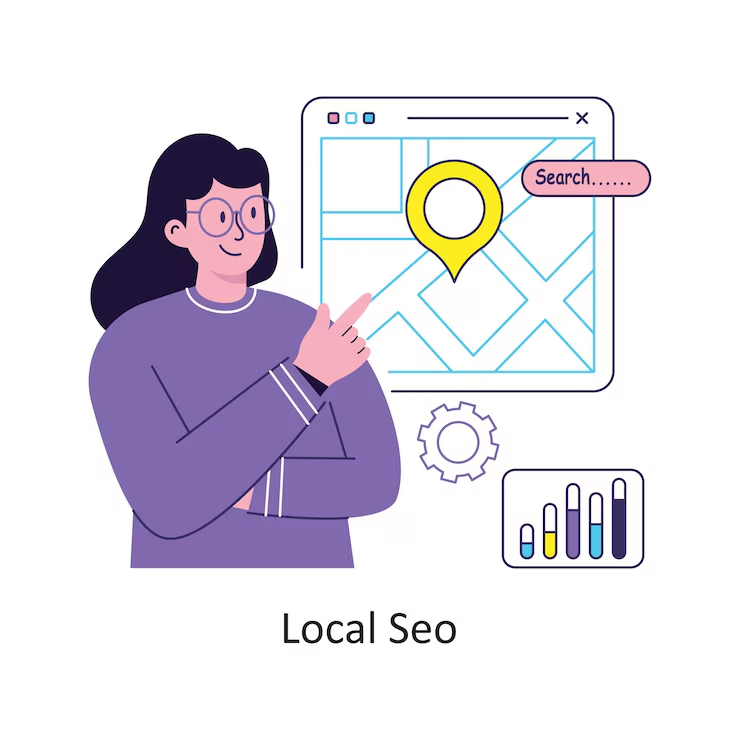
For businesses targeting local customers, implementing local SEO strategies is crucial for maximizing visibility within specific geographic areas. Local SEO focuses on optimizing our online presence to attract customers in our vicinity. This involves creating and optimizing a Google My Business profile, ensuring accurate business information across online directories, and encouraging customer reviews.
Optimizing for Local Search Results
In addition to these foundational steps, we should also incorporate location-based keywords into our content and meta tags. By doing so, we can enhance our chances of appearing in local search results when potential customers are looking for products or services nearby. This strategic approach enables us to reach our target audience more effectively and increase our online visibility.
Building a Strong Local Presence
Engaging with local community events or partnerships can further bolster our local presence and create opportunities for backlinks from local websites. By establishing ourselves as an active participant in the local community, we can build trust and credibility with potential customers, ultimately driving more foot traffic to our business.
Driving Results with Local SEO
By prioritizing local SEO strategies, we can effectively connect with customers in our area and drive foot traffic to our business. By focusing on local SEO, businesses can reap the benefits of increased online visibility, improved customer engagement, and ultimately, a stronger bottom line.
Monitoring and Analyzing Performance
To ensure the effectiveness of our SEO efforts, continuous monitoring and analysis are vital components of our strategy. By utilizing tools such as Google Analytics and Google Search Console, we can track key performance indicators (KPIs) such as organic traffic, bounce rates, and conversion rates. This data provides valuable insights into how well our strategies are working and where adjustments may be needed.
Regularly analyzing performance metrics allows us to identify trends and patterns in user behavior. For instance, if we notice a drop in organic traffic for specific pages, we can investigate potential issues such as outdated content or technical errors. Conversely, if certain keywords are driving significant traffic, we can capitalize on this success by creating additional related content or optimizing existing pages further.
By adopting a proactive approach to monitoring performance, we can make informed decisions that enhance our overall SEO strategy.
Leveraging Techno Softwares for SEO Success
In today’s fast-paced digital environment, leveraging technology is essential for achieving SEO success. Various software tools are available that can streamline our SEO efforts and provide valuable insights into performance metrics. From keyword research tools like SEMrush and Ahrefs to on-page optimization software such as Yoast SEO, these resources can significantly enhance our efficiency.
Moreover, automation tools can help us manage repetitive tasks such as social media posting or backlink tracking. By freeing up time spent on manual processes, we can focus more on strategic planning and creative content development. Additionally, utilizing analytics software allows us to visualize data trends more effectively, enabling us to make data-driven decisions that align with our goals.
By embracing technology in our SEO efforts, we position ourselves for greater success in an increasingly competitive digital landscape. In conclusion, mastering SEO requires a multifaceted approach that encompasses understanding its fundamentals, conducting thorough keyword research, optimizing on-page elements, creating high-quality content, building quality backlinks, utilizing local strategies, monitoring performance metrics, and leveraging technology effectively. As we navigate this complex landscape together, we empower ourselves with the knowledge and tools necessary to enhance our online presence and achieve lasting success in the digital realm.
If you are looking to optimize your WordPress website for SEO, Techno Softwares has a helpful article on how to do just that. Additionally, if you are a small business looking to implement CRM software, Techno Softwares offers insights in their article on CRM software for small businesses. And if you are considering developing an eCommerce app and want to know more about the cost involved, Techno Softwares has a detailed article on eCommerce app development cost.
FAQs
What is SEO?
SEO stands for Search Engine Optimization, which is the practice of increasing the quantity and quality of traffic to your website through organic search engine results.
Why is SEO important for driving organic traffic to a website?
SEO is important for driving organic traffic to a website because it helps improve the website’s visibility in search engine results pages, making it easier for potential customers to find the site when searching for relevant keywords.
How can SEO help a website rank higher in search engine results?
SEO can help a website rank higher in search engine results by optimizing the website’s content, improving its technical aspects, and building high-quality backlinks, all of which can improve the website’s relevance and authority in the eyes of search engines.
What are some common SEO strategies for driving organic traffic to a website?
Common SEO strategies for driving organic traffic to a website include keyword research and optimization, content creation and optimization, on-page and off-page optimization, technical SEO, and local SEO.
How can Techno Softwares help in leveraging SEO to drive more organic traffic to a website?
Techno Softwares can help in leveraging SEO to drive more organic traffic to a website by providing services such as keyword research and optimization, content creation and optimization, on-page and off-page optimization, technical SEO, and local SEO, all of which can improve the website’s visibility and ranking in search engine results.


